Just a few photographs from a recent brief visit to Melbourne. It’s been more than 15 years since my last visit and boy, has the city been transformed. Memories from this trip: street art, laneways, cakes and coffee …
Cafes are already open for breakfast at 7 am!
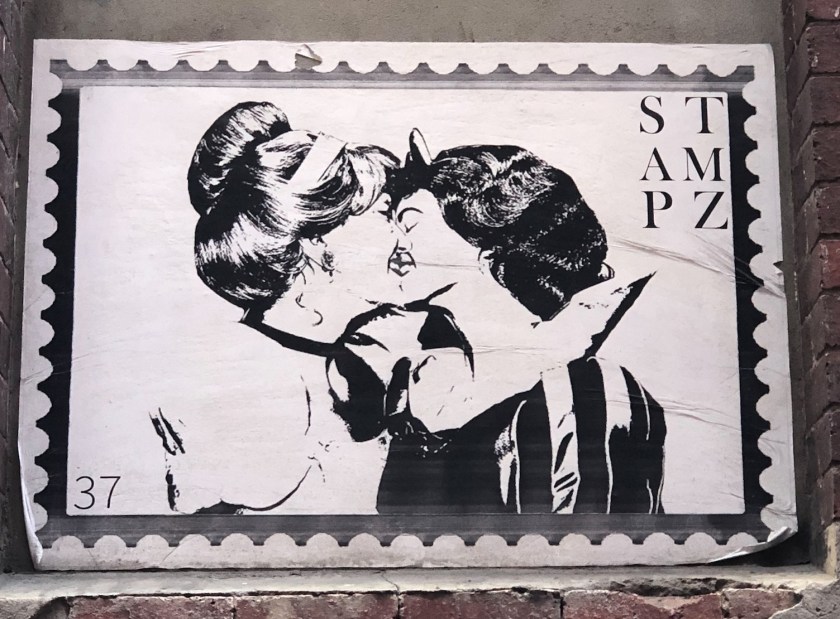
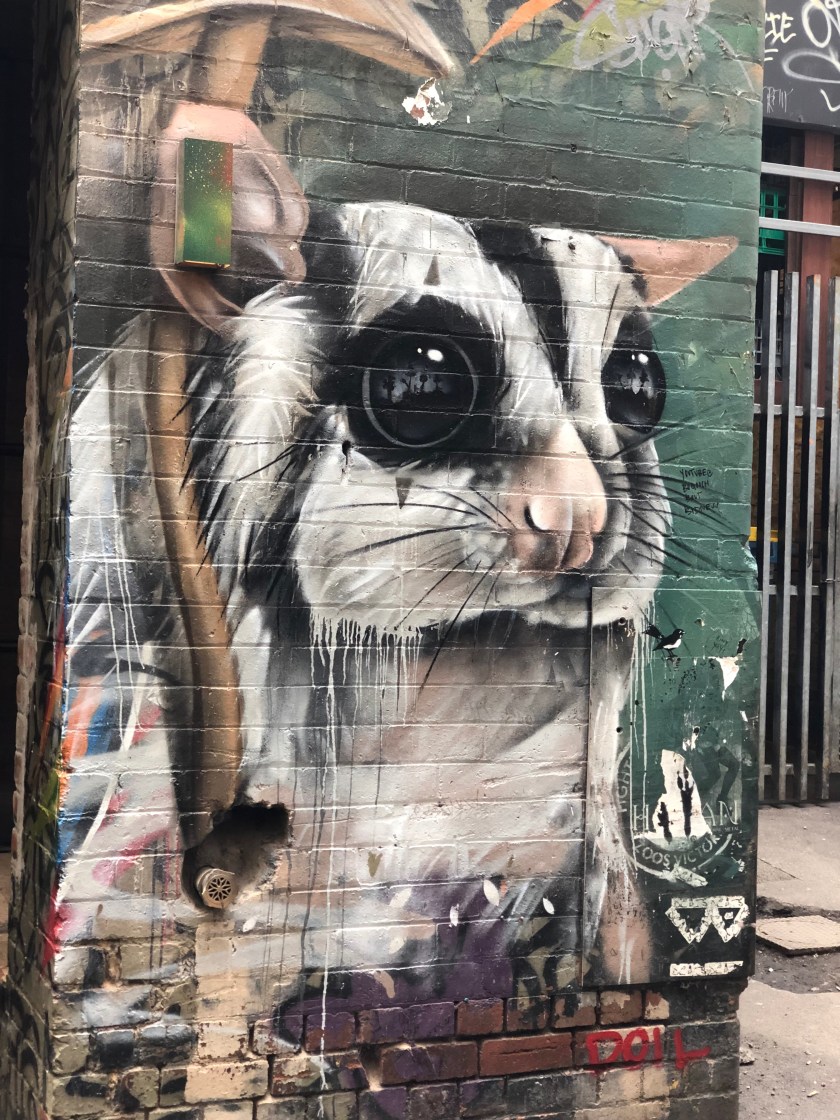
Melbourne’s street art is one of the city’s top tourist attractions. Over the past 20 years, the city’s street art scene has flourished. As early as 1984, Keith Haring had actually painted murals in the city. Of course, street artists never intend to create tourist attractions; just like anywhere else in the world, empty city walls were a way for them to express themselves, ‘talk’ to one another and ‘to’ the city using images and tags. Melbourne’s network of alleyways and hidden backlanes provided a ready canvas while the city’s dynamic arts and cultural life had always attracted artists. The tourism authorities naturally, latched onto street art as a way to promote the ‘hipness’ of Melbourne – using it for ‘creative tourism’, which purist aficionados and street art practitioners view with some suspicion. Urban underground art and tourism do not make the easiest bedfellows, as discussed in this article.
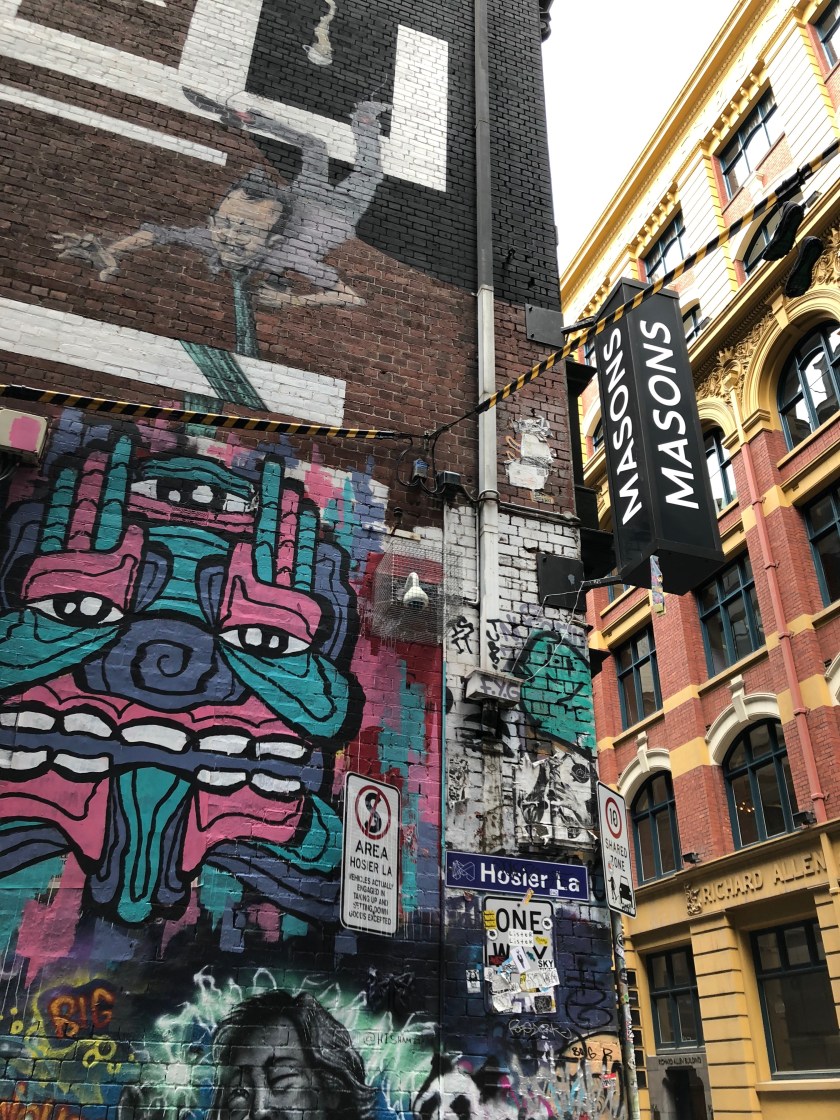
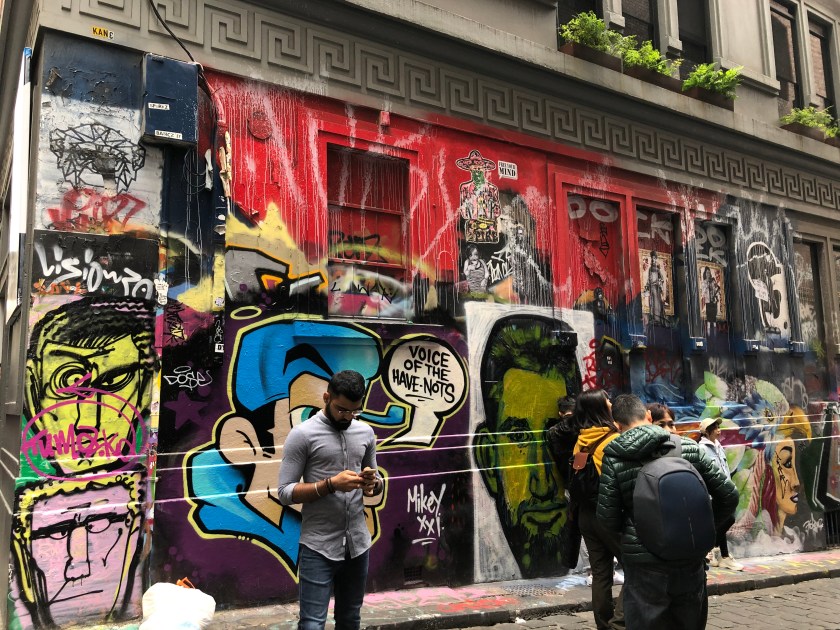
Hosier Lane – probably too famous for its own good.
When I got to Hosier Lane, I was surprised at the crowds there.There were tourists of different nationalities and ages, all taking photos and videos, no doubt to be shared on millions of Instagram feeds. It was quite difficult trying NOT to be in other people’s photographs.
Almost hidden in the colourful alley is a social enterprise cafe, Good 2 Go, which supports training, employment opportunities and other services for people at risk including the homeless. I hope some tourists get their coffees there and support a good cause!
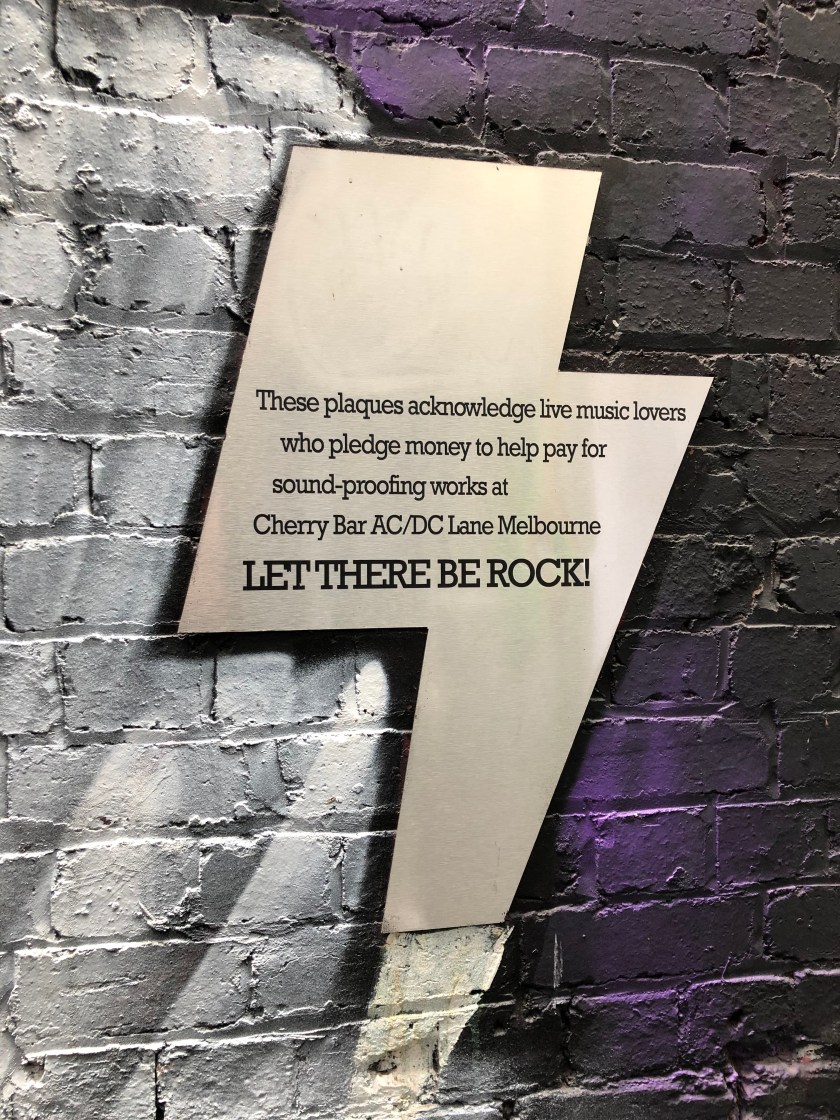
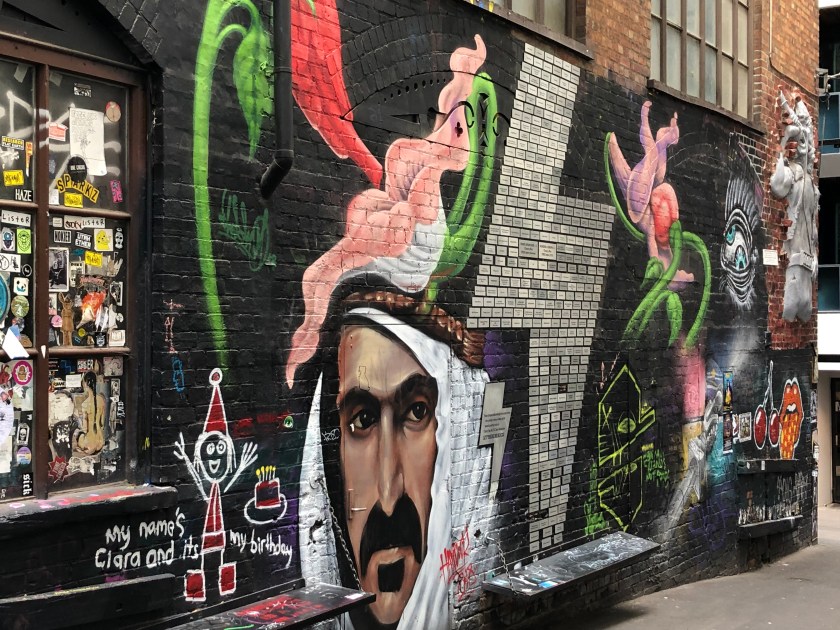
Wandering through the city centre, I made my way to AC/DC Lane – named after the rock band as a tribute, which I thought was a cool thing to do. It was surprisingly empty.
The street art is varied, from painterly murals to tags to stencils to posters, which makes it visually interesting. It’s hard not to look like a tourist when you’re stopping to look at the walls all the time.
Degraves Street – usually busy, it’s lined with restaurants and cafes.
“Laneway culture” is another aspect of Melbourne / Australian city life and has become another tourist attraction. Basically, laneways are the alleys between buildings in the city centre which provide ‘backdoor’ access to the buildings. In the past, the city centre was pretty quiet at night and so were these alleys. But in the 1990s during the recession, young entrepreneurs started businesses and cafes in these lanes to take advantage of cheap rents. Laneways now house eclectic shops and boutiques, bars, restaurants, cafes and with their buzzy atmosphere, are very much part of the city’s urban renewal. I was in Adelaide two years ago and saw laneways there buzzing with bars and restaurants too.
Loved the coffee at Duke’s Coffee Roasters. Picked up my cuppa at 7.30 in the morning.
Melbourne is also famous for good coffee, and it seems there’s a coffee joint on every street. Rejoice, coffee lovers!
Cafes are open early for breakfast, and the menus looked familiar … avocado on toast, eggs benedict, pancakes, the classic fry-up … Basically, the same as the brunch menus at trendy cafes back home in Singapore. So that’s how our brunch trend started – which really shouldn’t surprise me since so many Singaporeans study in Melbourne or holiday there, and Australian chefs and restarauteurs have made their mark in Singapore’s dining scene.
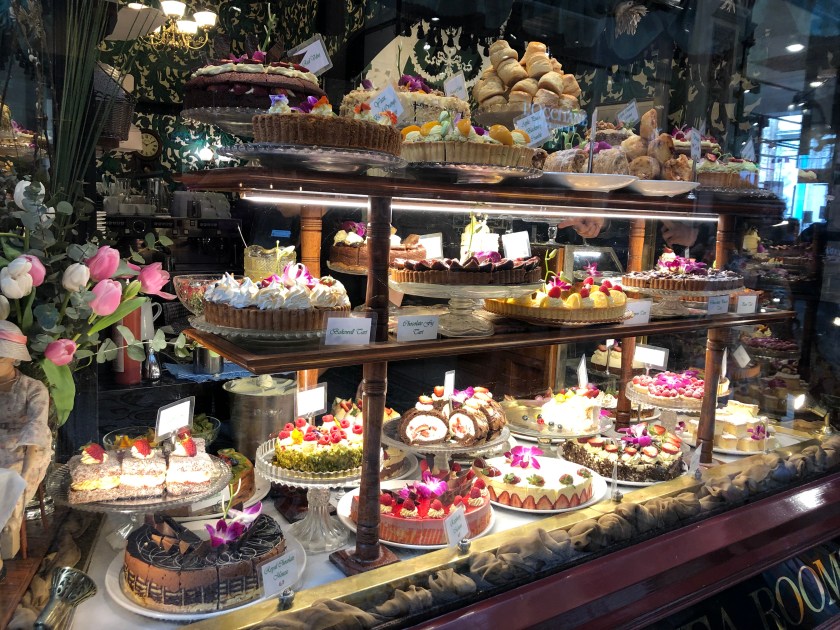
Lusciously tempting cake display at Hopetoun Tearoom
I wandered through The Block Arcade on Collins Street and admired the astoundingly pretty cake display in the window of Hopetoun Tearoom. Found some inspiration for possible future homebakes!
Actually, The Block Arcade and other similar ‘malls’ that straddle parallel streets, are the originally ‘laneways’ dating from the 19th century. They’re essentially covered pedestrian lanes lined with shops – very useful on rainy days, and architecturally appealing.
Brunetti’s – a long established Italian eatery and bakery in the city centre with a huge selection of Italian cakes, biscuits and pastries.
Melbourne has also earned a reputation as a dining city. When I got off my flight from Singapore, I overheard fellow passengers planning what to do for the day: head out to lunch at a well-known restaurant, go shopping and buy chocolates, take a coffee break at a famous cafe for its famous coffee, look for the famous apple strudel (apparently, a trending thing among a particular demographic of Singaporeans).
There’s certainly no shortage of places for dining and drinking. Wandering along the South Bank, across the Yarra River and back to the City Centre in the evening, there was an unmistakeable vibe of ‘the good life’ from the lights and music of the bars and restaurants, and everywhere the buzz of happy conversation.
These attractions make Melbourne a great weekend destination. Apart from these, there’s still other places to visit – galleries, museums, the botanic gardens, and more. Well, there’s always next time …
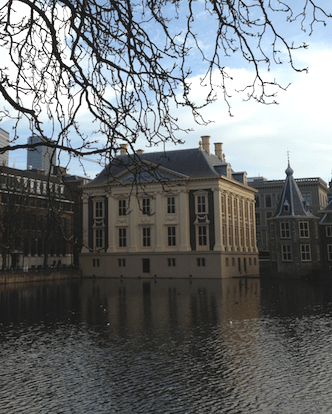
This is the Mauritshuis museum. The beautifully-proportioned building reflected serenely in the small lake looks like something out of a fairytale, doesn’t it? If that isn’t enough to attract a visit, how about the fact that it’s the home of the Girl with a Pearl Earring –Dutch artist Vermeer’s famous painting?
With a free day to while away, I decided to visit the Mauritshuis. My sister and I had half-joked that in our lifetime, we’d try to see all the Vermeers in public galleries: after all, there are only about 36 known works by the artist. A visit to the Mauritshuis would tick off 3 more on the list: in addition to the Girl with a Pearl Earring, they also have an earlier work – Diana and her Companions, and the magnificient View of Delft.
The Mauritshuis is widely considered one of the ‘great small museums’ of the world. At any one time, there are only around 250 paintings on display, in 16 human-scale rooms. This allows for some reflective encounters with the works – visitor numbers permitting. (As a comparison, the Rijksmuseum in Amsterdam has over 8,000 artworks and objects on display in 80 rooms.)
The Mauritshuis is in The Hague (Den Haag) in the Netherlands. Most of us know The Hague as the home of the International Court of Justice, and perhaps it’s a surprise to see such a gem of a museum in this city. The Mauritshuis is actually also the Royal Dutch Picture Gallery. The basis of its holdings was the Royal Collection of paintings presented to the state by King William 1 of Orange in 1816. Today, with acquisitions over the years, the museum’s holdings comprise over 800 works, mostly Dutch and Flemish paintings made between the 15th and 18th centuries. The museum has a clear focus on that era, and is renowned for its remarkable collection of paintings from the Golden Age of Dutch painting in the 17th century including not just Vermeer, but also Rembrandt, Frans Hals, Jan Steen, among others.
There she is – the Girl with the Pearl Earring
Thanks to Vermeer’s painting – the basis of Tracy Chevalier’s best-selling novel published in 2000 and the subsequent film adaptation starring Scarlett Johannsson and Colin Firth – the Maurithuis has gained thousands of fans. When the museum was closed for major refurbishment from 2012- 2014, some of the works went on a world tour and 2.2 million people worldwide saw this blockbuster exhibition! The Tokyo leg of the exhibition was said to be the most visited exhibition worldwide in 2012, attracting over 10,000 visitors a day. The Girl certainly has a strong following.
The refurbished museum reopened in June 2014 to great fanfare, and between June 2014 and June 2015, attracted 600,000 visitors. The refurbishment was considered a huge success and allows the museum to handle the many more visitors who have been coming in recent years. The visitors’ reception hall now occupies a huge basement area, there’s room for a café, auditorium, education centre and additional exhibition gallery in the new wing which is linked to the original building by an underground passage. From the museum’s main courtyard, visitors now go underground via a glass and steel lift or staircase, to an expansive, bright reception lobby. If there are too many people and queues form, there’s space for people to wait and browse the museum’s app to read up about the museum and paintings.
The view from one of the museum’s windows
Back to my visit … I love small museums where works are displayed with sensitivity to their content and context, and which give visitors enough room for contemplation. The Mauritshuis satisfies at all levels. The building itself was originally a home, built for a wealthy military man Johan Maurits. Hence, rather than endless passageways and huge picture galleries, the rooms are what you’d expect of a comfortable mansion, and not much has been done to change the shape of the house; the paintings are displayed in rooms with damask-covered walls, curtained windows, ceiling frescoes and carved wooden decorations. Halfway through the collection, I came upon what seemed to be a small ballroom or reception room – this was the Golden Room, which only contains pictures by an Italian artist Pellegrini (1675 – 1741). In fact, Pellegrini had made the original decorations for this room, and the museum has preserved and restored the room in its original glory. It’s this balance between house, rooms and paintings that makes a visit here so rewarding: the paintings of the Dutch Golden Age are displayed in a house from this exact era. The relationship between art and the real world, is made clear. In fact, you can look out of the windows in many of the rooms and see the daily surroundings of the city outside the museum, with people walking by, the sky changing its moods, and so on: you view a painting, and then look out at a real view.
What are the highlights of the collection? Although the Girl is the most famous work, there are other gems to discover. The Golden Age paintings depict a wide range of subject matter, as the Netherlands entered an age of prosperity and more people were able to afford little luxuries including buying paintings. Scenes of daily life, landscapes and cities, biblical stories, portraits, are represented. As society prospered, so did bad habits! Jan Steen’s satirical painting As the Old Sing, So Pipe the Young depicts how adults pass on bad behavior to their children – the carefree (and idle) adults carouse and drink freely before kids and babies, and there’s even a man offering a pipe to a young boy. The man is a self-portrait of Steen himself, as if he’s aware that he’s not entirely blameless.
Another scene of Dutch life in the 17th century is Hans Avercamp’s Ice Scene from 1610, which could be a Christmas card scene, showing people of the day skating and playing games on the ice.
There are a number of Rembrandts, including the rather gory The Anatomy Lesson of Dr Nicolaes Tulp that depicts a cadaver’s open arm. The Rembrandt that many people will remember however, is likely his late Self-Portrait (1669). Rembrandt made a great number of self-portraits; taken together, they are a moving portrayal of human mortality. This late painting shows a sagging, tired face – but with eyes and an expression that are still alive – under a turban-like cap. Contrast this to Frans Hals’ Laughing Boy, painted confidently with loose brushstrokes, which makes you want to laugh along with him.
Fans of Hans Holbein will enjoy his detailed, precise portraits here, and fans of Dutch still lifes will also have much to look at. Speaking of still lifes, there’s even a Chardin here.
One of the most unusual paintings displayed is Paulus Potter’s The Bull. One wonders, who would commission such a large painting of such a prosaic subject – and if it’s a commission at all? Nevertheless, the painting reveals the importance of cattle rearing and agriculture to the Dutch: key cornerstones of the economy as much as trade. I particularly liked the details of the flying lark in the corner of the painting, as if Potter was capturing a moment in time.
But of course, it’s really the Girl and View of Delft that draws most visitors. Johannes Vermeer’s paintings of women quietly absorbed, or sometimes surprised by the artist/viewer, in ordinary activities – pouring milk, writing a letter, holding up a necklace – have held a fascination for many, drawn to their atmosphere of mystery and calm and the sense of a narrative held in suspension. The Girl, however, is rather different: there is no household setting behind her. Her luminous face stares at us out of a plain dark background; her mouth is slightly open, as if she’s forever about to say something to the viewer. She’s actually a ‘tronie’, a genre of painting in which Dutch artists also indulged: a fictive depiction of a person or model dressed in fanciful clothes. The turban-like head covering, which is quite un-Dutch, gives this away. Her particular mystery, which inspired Chevalier’s book, is her identity – who was she? – and the fact that neither the painting nor what little we know of Vermeer’s biography gives away any clues. The second part of the mystery is the sheer skill of the painter, who apparently effortlessly crafts the distinctive effects of the painting: the luminous lips, expressive eyes, even the earring. As to whether that’s really a pearl earring … the jury’s out on that. In fact, the painting was previously known by other names, such as the rather more prosaic Head of a Young Girl.
In the Mauritshuis, she’s accompanied by other ladies, in a small room. An intimate setting for an intimate work.
Perhaps the more impressive Vermeer though, is View of Delft, which shows the artist’s genius at depicting light and details. You feel as if you are there with him, above the city, early one morning, warching the light change as the clouds move overhead, and looking at the people going about their daily business, imagining the rest of the city waking up.
Leaving the museum, I walk back down the grand interior staircase to the house’s lobby and admire the sensitivity of the refurbishment. A glass elevator for visitors quietly rises above the marble floor; huge vases of flowers add a contemporary touch even as they complement the flowery still lifes that hang here. A lot of the refurbishment is not noticeable, actually: the windows were replaced, climate control system upgraded, wall damask coverings replaced, and new LED lights installed to show the paintings in even better light.
It shouldn’t take more than a couple of hours to enjoy the museum, even if you pause for contemplation before your favourite works. There’ll be time to take a look at the Binnenhof – the distinctive Dutch Parliament building complex next door to the museum, and for a short walk around the ‘lake’, the Hofvijer. You will have to walk around the lake to get the best photos of the museum and its reflection in the water.
I would definitely recommend booking tickets online, ahead of time. You don’t even need to print out the ticket: just show it on your phone for the attendants to scan the code. The museum’s website includes information on the works in its collection – an excellent browse if the need to look at Dutch art hits you.
The city centre is nearby, and it’s worth a wander through the pretty cobblestone streets. The centre and museum are within walking distance of the train station, and it’s only a half-hour train ride from Amsterdam (the Netherlands is a very compact country). Another fun fact: the ‘miniature Holland’ park, Madurodam, is also here.
The Mauritshuis is worth the day trip, and it’s so much more than the Girl with a Pearl Earring.








 This is the Mauritshuis museum. The beautifully-proportioned building reflected serenely in the small lake looks like something out of a fairytale, doesn’t it? If that isn’t enough to attract a visit, how about the fact that it’s the home of the

 travelingpiscean.com