Just a few photographs from a recent brief visit to Melbourne. It’s been more than 15 years since my last visit and boy, has the city been transformed. Memories from this trip: street art, laneways, cakes and coffee …
Cafes are already open for breakfast at 7 am!
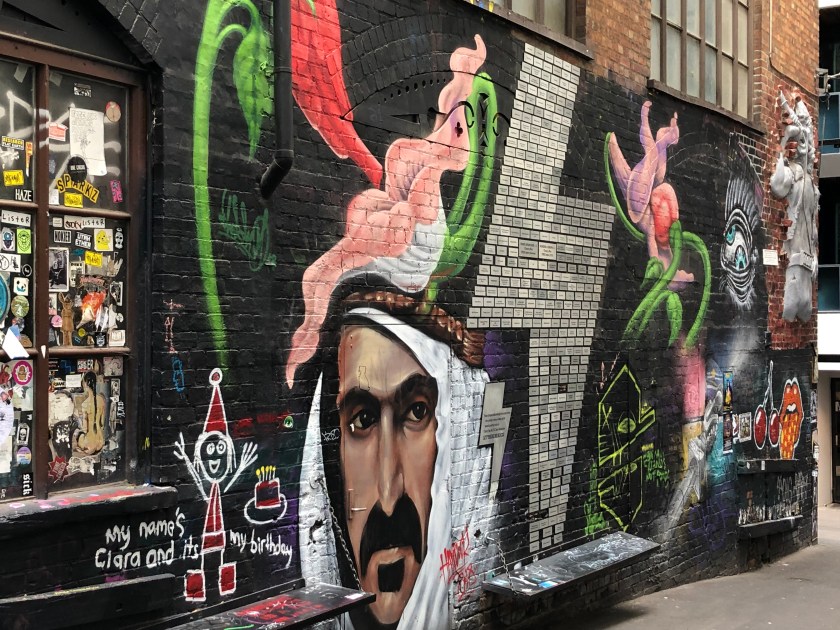
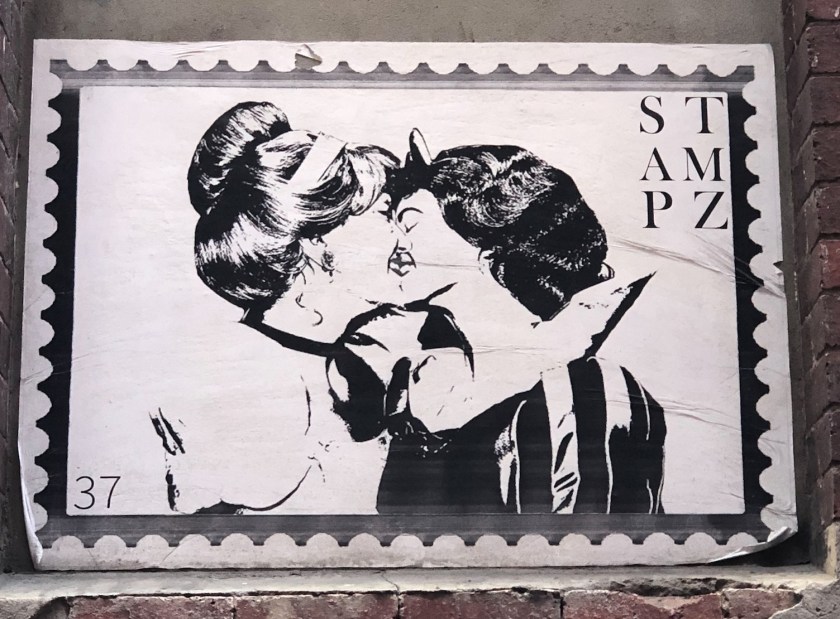
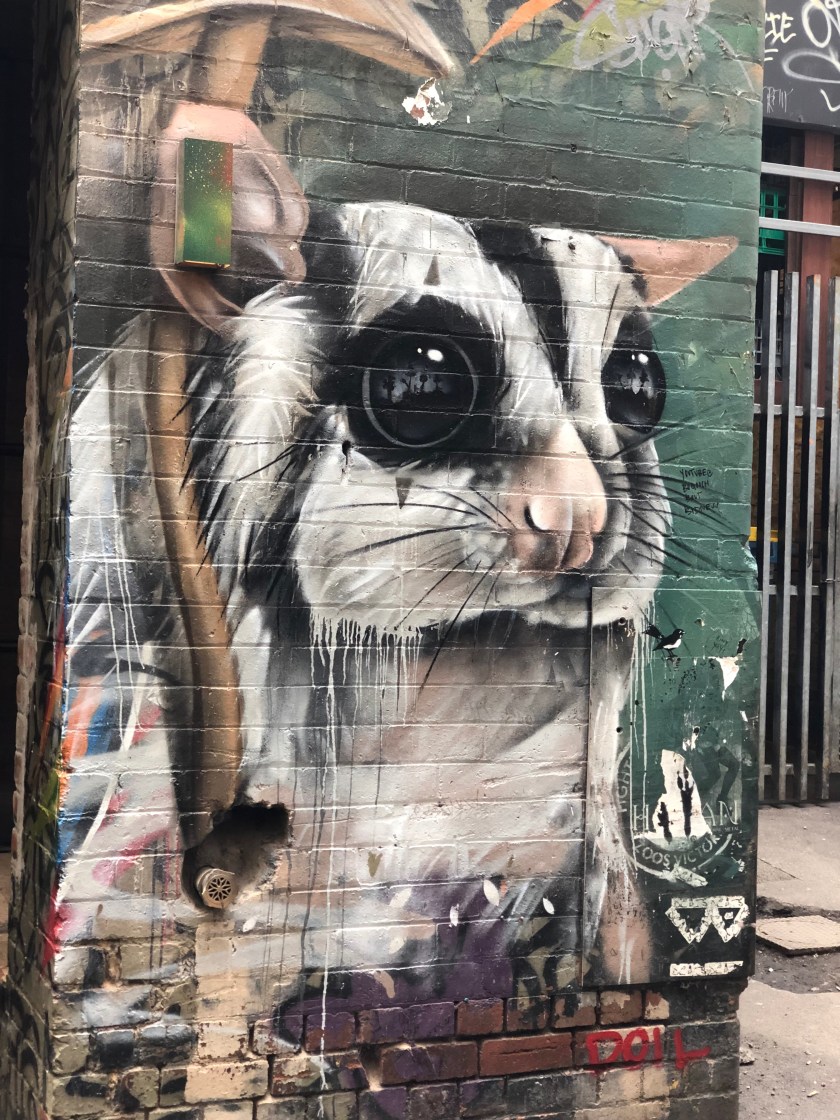
Melbourne’s street art is one of the city’s top tourist attractions. Over the past 20 years, the city’s street art scene has flourished. As early as 1984, Keith Haring had actually painted murals in the city. Of course, street artists never intend to create tourist attractions; just like anywhere else in the world, empty city walls were a way for them to express themselves, ‘talk’ to one another and ‘to’ the city using images and tags. Melbourne’s network of alleyways and hidden backlanes provided a ready canvas while the city’s dynamic arts and cultural life had always attracted artists. The tourism authorities naturally, latched onto street art as a way to promote the ‘hipness’ of Melbourne – using it for ‘creative tourism’, which purist aficionados and street art practitioners view with some suspicion. Urban underground art and tourism do not make the easiest bedfellows, as discussed in this article.
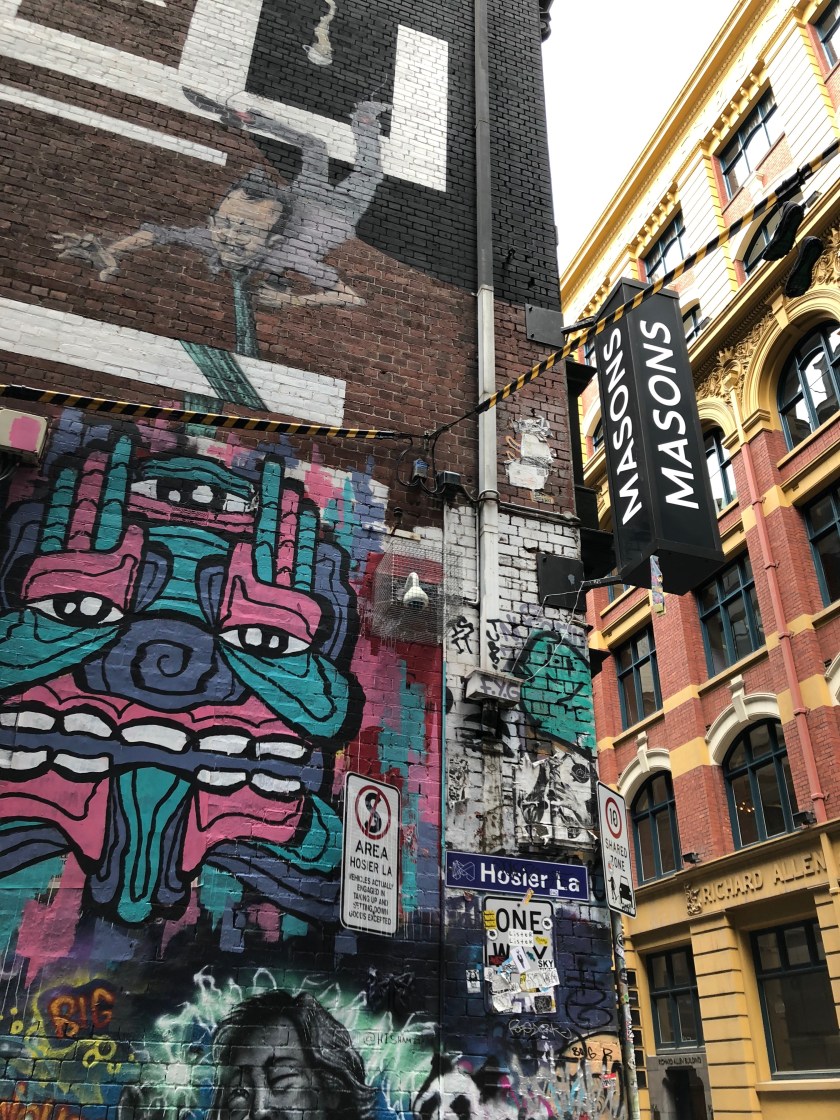
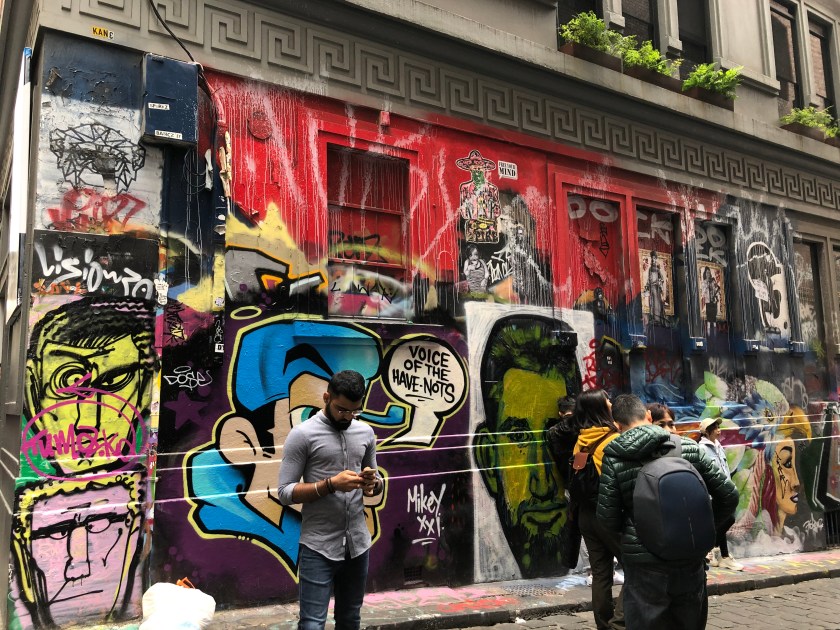
Hosier Lane – probably too famous for its own good.
When I got to Hosier Lane, I was surprised at the crowds there.There were tourists of different nationalities and ages, all taking photos and videos, no doubt to be shared on millions of Instagram feeds. It was quite difficult trying NOT to be in other people’s photographs.
Almost hidden in the colourful alley is a social enterprise cafe, Good 2 Go, which supports training, employment opportunities and other services for people at risk including the homeless. I hope some tourists get their coffees there and support a good cause!
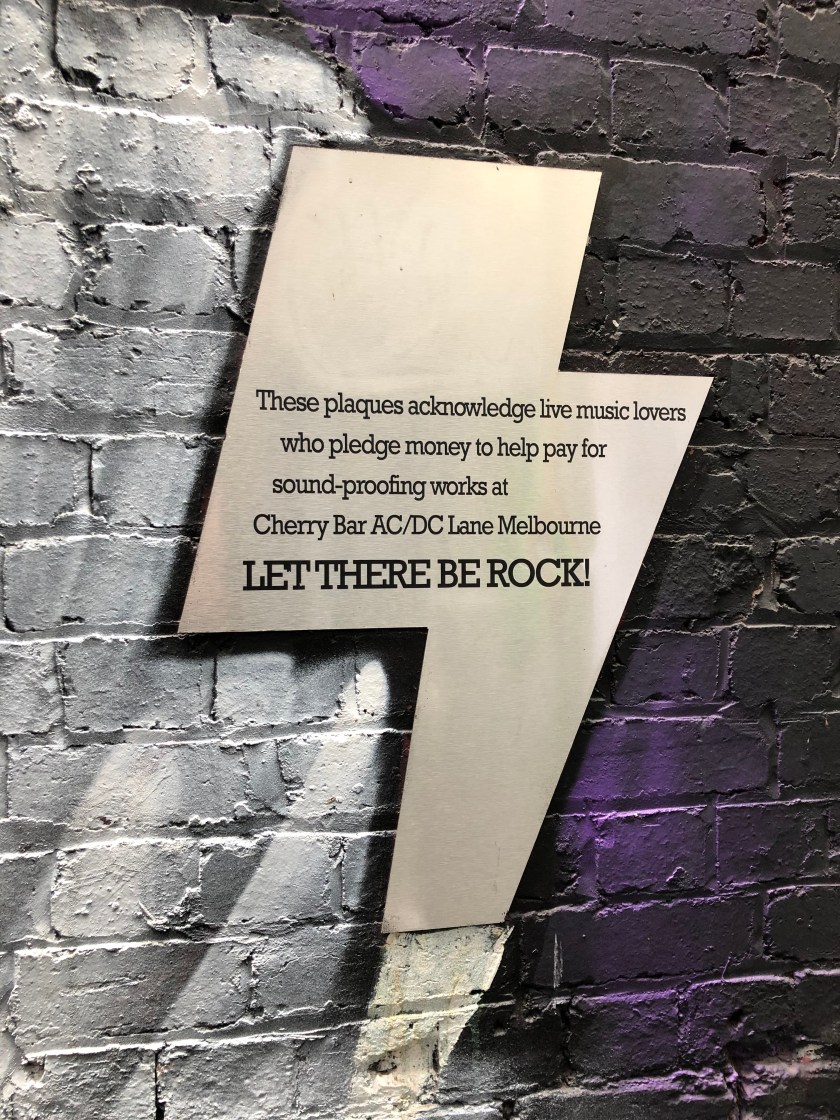
Wandering through the city centre, I made my way to AC/DC Lane – named after the rock band as a tribute, which I thought was a cool thing to do. It was surprisingly empty.
The street art is varied, from painterly murals to tags to stencils to posters, which makes it visually interesting. It’s hard not to look like a tourist when you’re stopping to look at the walls all the time.
Degraves Street – usually busy, it’s lined with restaurants and cafes.
“Laneway culture” is another aspect of Melbourne / Australian city life and has become another tourist attraction. Basically, laneways are the alleys between buildings in the city centre which provide ‘backdoor’ access to the buildings. In the past, the city centre was pretty quiet at night and so were these alleys. But in the 1990s during the recession, young entrepreneurs started businesses and cafes in these lanes to take advantage of cheap rents. Laneways now house eclectic shops and boutiques, bars, restaurants, cafes and with their buzzy atmosphere, are very much part of the city’s urban renewal. I was in Adelaide two years ago and saw laneways there buzzing with bars and restaurants too.
Loved the coffee at Duke’s Coffee Roasters. Picked up my cuppa at 7.30 in the morning.
Melbourne is also famous for good coffee, and it seems there’s a coffee joint on every street. Rejoice, coffee lovers!
Cafes are open early for breakfast, and the menus looked familiar … avocado on toast, eggs benedict, pancakes, the classic fry-up … Basically, the same as the brunch menus at trendy cafes back home in Singapore. So that’s how our brunch trend started – which really shouldn’t surprise me since so many Singaporeans study in Melbourne or holiday there, and Australian chefs and restarauteurs have made their mark in Singapore’s dining scene.
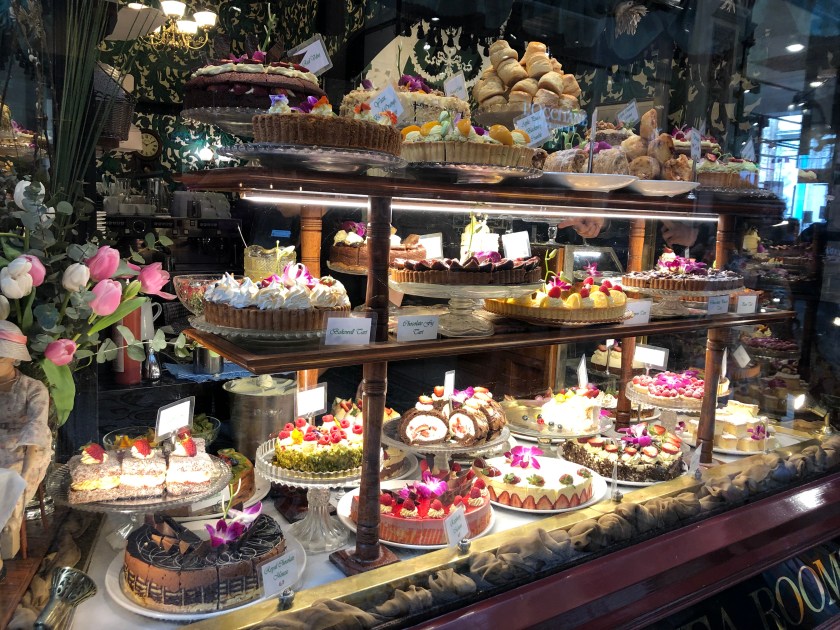
Lusciously tempting cake display at Hopetoun Tearoom
I wandered through The Block Arcade on Collins Street and admired the astoundingly pretty cake display in the window of Hopetoun Tearoom. Found some inspiration for possible future homebakes!
Actually, The Block Arcade and other similar ‘malls’ that straddle parallel streets, are the originally ‘laneways’ dating from the 19th century. They’re essentially covered pedestrian lanes lined with shops – very useful on rainy days, and architecturally appealing.
Brunetti’s – a long established Italian eatery and bakery in the city centre with a huge selection of Italian cakes, biscuits and pastries.
Melbourne has also earned a reputation as a dining city. When I got off my flight from Singapore, I overheard fellow passengers planning what to do for the day: head out to lunch at a well-known restaurant, go shopping and buy chocolates, take a coffee break at a famous cafe for its famous coffee, look for the famous apple strudel (apparently, a trending thing among a particular demographic of Singaporeans).
There’s certainly no shortage of places for dining and drinking. Wandering along the South Bank, across the Yarra River and back to the City Centre in the evening, there was an unmistakeable vibe of ‘the good life’ from the lights and music of the bars and restaurants, and everywhere the buzz of happy conversation.
These attractions make Melbourne a great weekend destination. Apart from these, there’s still other places to visit – galleries, museums, the botanic gardens, and more. Well, there’s always next time …
When I was a child, we learnt a song in school that went: “planting rice is never fun, bent from morn till set of sun …” I remember singing this on road trips in Malaysia as we passed by field after field of rice paddies and the occasional water buffalo. Today though, these views have been replaced by oil palm plantations, their endless rows of palms marching inexorably into the distance. Those childhood drives through rice paddies came to mind in the Mekong Delta as we passed by jade-green rice fields. The cultivation of rice is just one of the agricultural riches that we owe to the great Mekong, Southeast Asia’s longest river.
The Mekong, Southeast Asia’s longest river, runs for 2700 miles through China, Myanmar, Laos, Thailand, and Vietnam, emptying into the South China Sea in the delta. It’s the lifeline of millions of people in the region and beyond, and you truly get a glimpse into the bounty and might of this river on a visit to the Mekong Delta in South Vietnam. Here, the river finally reaches the sea through the delta lands, crisscrossed by numerous channels and tributaries – a rich agricultural landscape where gave me a deep appreciation of the source of the food we eat every day. In addition to the paddy fields, there are lush fruit orchards (oranges, dragon fruit, durian, mangosteen, coconut and more). The area is also famous for the floating markets.
We had a motorcycle tour through the villages. As we wound our way through the paths, we heard loud sounds of chirping swallows – but they weren’t coming from real birds. The cultivation of bird’s nest has become quite the rage here because of the profits to be made, and farmers have built tall barns for swifts to nest in. To attract the swallows, the farmers broadcast the calls of the swifts on outdoor sound systems.
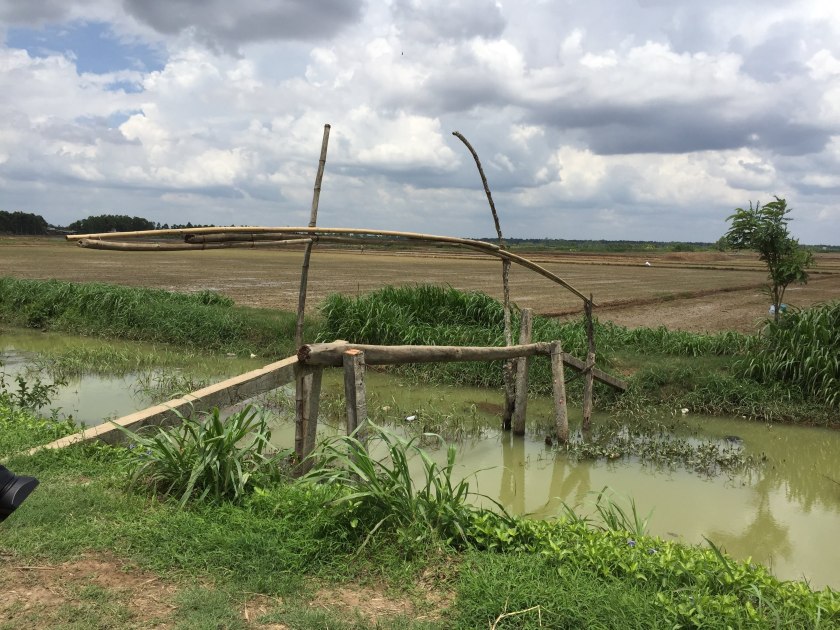
We saw rice fields up close, the bikes carefully navigating narrow paths between the paddies, the sun beating down on our shoulders. In the midday heat, dragonflies floated overhead. We passed by monkey bridges spanning ditches among the cultivated fields – I have no doubt that crossing these simple wooden structures truly requires the agility of a monkey. Needless to say, we just stopped for a photo-op and didn’t even attempt a crossing.
A monkey bridge
Riding down a path, we came across an old woman counting a batch of coconuts, squatting on the ground among the coconut trees, tossing the fruits one by one from one pile to another. Suddenly we heard a mobile phone ringing whereupon she casually pulled out a mobile phone from her pocket and answered it. After a brief conversation, she squatted down and resumed her count as if the interruption never happened!
Answering a phone call in the middle of counting the coconut harvest
We met some local women planting rice, bare legs half-submerged in the water. Gamely posing for photographs and laughing, they bantered good-naturedly with our young tour guide, asking if he was looking for a wife and proposing their sisters, daughters or even themselves as prospective brides. These are the indomitable daughters of the delta. Planting rice may not be fun in the heat and humidity of south Vietnam, but they still took time out to greet us strangers merrily. Or maybe, our appearance gave them with a welcome break from their labours. I wondered if their daughters and grand-daughters would continue with this back-breaking work, or if these women would prefer their children to take on less laborious jobs. In the future, who would cultivate rice – our staple food?
The chatty ladies working in the rice paddies
Lunch was a home-cooked meal in a Vietnamese home, with spring rolls, pork, vegetables and a sour fish soup, complete with very large chunks of fish. Vietnamese houses always have a front porch, which is very useful in the hot summer as the family can gather there to catch the breeze. The front yards are always swept clean while the front room in the house also occasionally doubles up for motorcycle parking!
The two main towns in the delta region are My Tho, which hosts thousands of tourists embarking on cruises on this part of the Upper Mekong, with the boats passing the cultivated islands named after Vietnamese mythical animals: dragon, unicorn, phoenix and turtle. We transferred to a smaller boat at Ben Tre, where we chugged through a tranquil, narrow channel of the river, lined with trees – these channels are described as “Amazon-like” in tourist brochures. The final stop was a coconut plantation where we learnt about coconut rats – large rodents which climb up the trees to get to the juicy fruit, which the farmers keep away by nailing metal plates on the coconut trunks, as the rats will not be able to climb up the metal plates. I remembered once again the usefulness of the coconut tree: fruit for eating or to be made into sweets, juice for drinking, the shell for carving into objects, and the leaves for the roof of your house. And yes, there are plenty of opportunities to buy some coconut souvenirs here.
Bicycle, mobile phone, and coconut trees.
It was a long day, and we headed to the biggest town in the delta, Can Tho, for the night, passing through the spectacular, Mekong-spanning 8331m-long Rach Mieu suspension bridge which was completed in 2008.
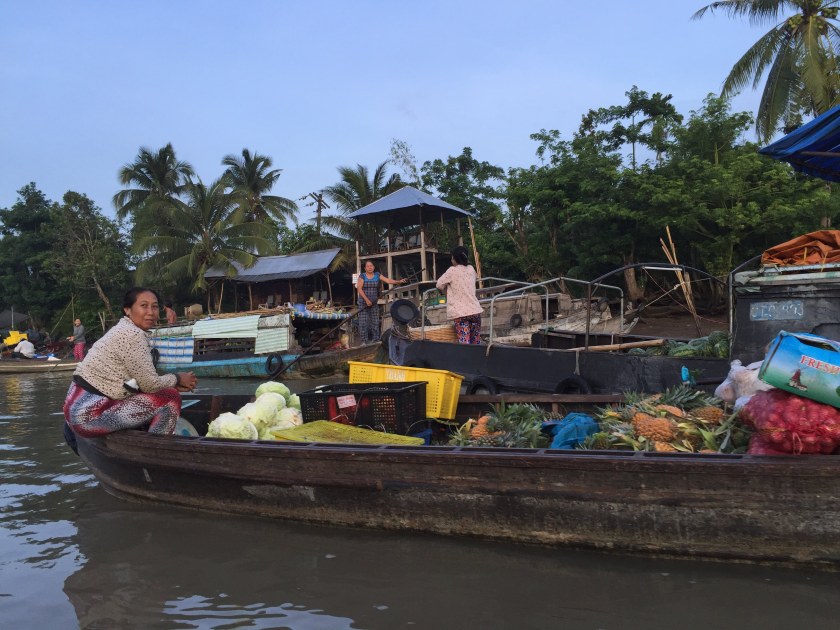
To see the floating markets, it’s necessary to stay overnight in the region – we were already on an arrow-boat and heading out to the markets at 6 am. Unfortunately it was a festival day so the markets weren’t as bustling as they normally were. These markets capture the agricultural richness of the region. Each boat had a long pole at its bow, with specific vegetables tied to the pole indicating the produce it was carrying. Transferring larger vegetables like cabbages to the buyer’s boat is simple: the crew form a line and toss the cabbages from one person to the next until it reaches the boat. Small boats selling coffee and breakfast plied between the larger boats and tourist boats.
The traders of the floating market spend weeks at a time on the river – a way of life that has its own rhythms according to the seasons. From here, the fruits and vegetables make their way to markets around the country, ferried to their destinations by truck, motorbike and even bicycle. Boats from here sail all the way to Ho Chi Minh City. This is a way of life that has gone on for generations, and is likely to continue for a while longer. And along the river, people still live in wooden houses, and use the river water for washing or for their plants. The Mekong is life.
Children outside a house in a village near one of the floating markets
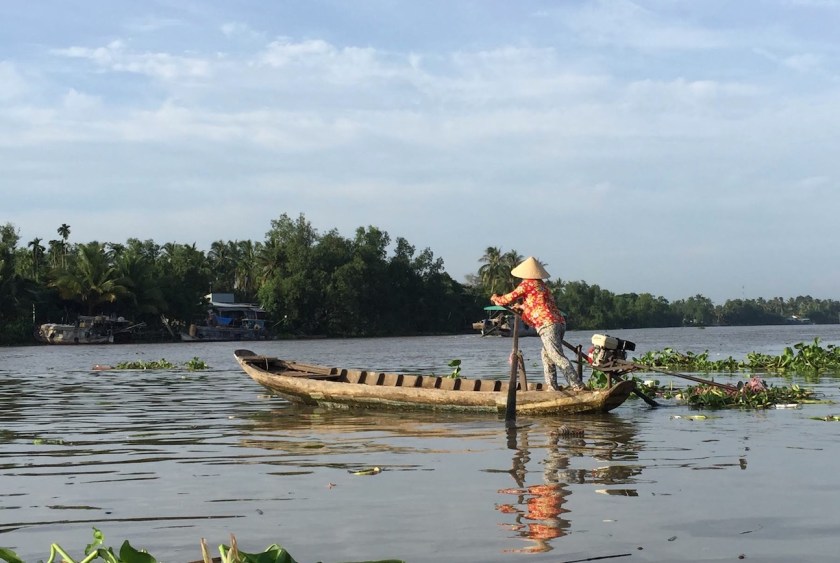
Leaving the market, our boat turned into a network of smaller tributaries and we passed quietly through a lush green landscape, passing the occasional village. It was 7 am, still early, but already time for the morning news and daily propaganda radio broadcasts amplified in the villages through outdoor speakers. Accompanied by this morning soundtrack, people went about their daily business, riding motorbikes and bicycles on narrow roads and paths and across bridges in this peaceful watery land. Women still transported goods the traditional way, on baskets suspended on either end of a wooden pole balanced across their shoulders, wearing the traditional conical bamboo hats to protect them from the sun. From the narrow tributaries, we suddenly emerged into a wider channel and came across fishermen (and women) in small boats. Time to capture some signature shots of life on the Mekong.
I imagined the Mekong as a network of veins, arteries and capillaries, bringing teeming life onto the earth and sustaining the lives of people, plants, and the very land here. Nature provides and human ingenuity over the generations has harnessed the power of the river for life and civilisation.
We also learnt that sadly, the Mekong is changing, and possibly not for the better. Further upstream, stretches of the river have been dammed for hydroelectricity, with effects on the river’s route downstream, its biodiversity, and ultimately the lives of people living along the mighty river. It’s not certain what the future will bring, and what damage we’re doing to these rich lands.
The Cinque Terre is on the bucket list of many a traveller, and justifiably so. Five picture-postcard Italian hilltop villages with pastel-coloured little houses clinging tightly onto steep cliffs rising from an azure sea – it’s the quintessential dream vacation destination.
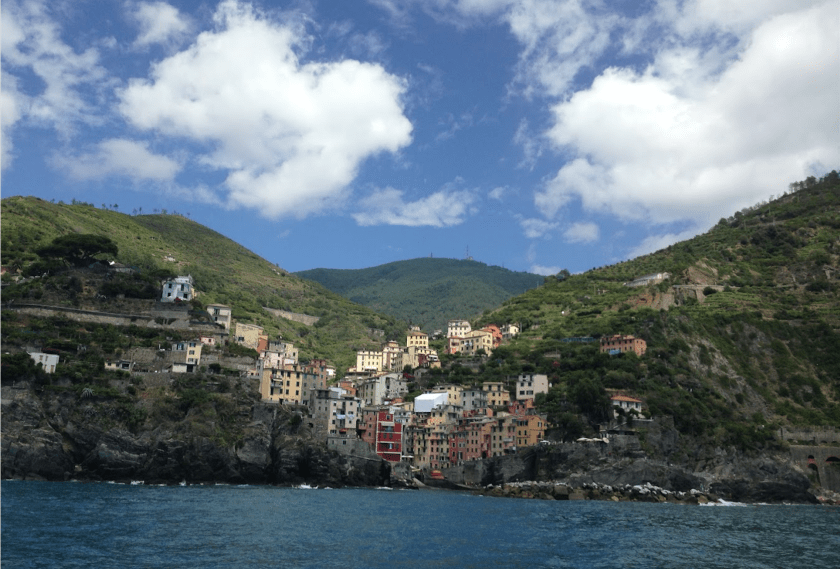
The village of Riomaggiore seen from the sea
Cinque Terre literally means ‘five lands’. The five lands in question lie along the Ligurian coast in northwest Italy, and they are, from west to east, Monterosso, Vernazza, Corniglia, Manarola and Riomaggiore. The zone around the villages is a UNESCO World Heritage site, and also a designated National Park.
Global fame means the villages can feel unbearably crowded in the middle of the day when tour groups, daytrippers and other travellers choke the small village squares and narrow streets. The Cinque Terre has certainly become a victim of its own picturesqueness and there has been talk of the municipal government imposing a quota on the number of visitors – but so far, that hasn’t happened yet.
Ironically, part of the Cinque Terre’s charm lies in their relative isolation – though you wouldn’t believe it, given the hordes of people who make their way there! In fact, the villages – which date from the Middle Ages – were quite isolated until the 1960s. Because they’re car-free villages and are on steep hills, the best way to get there is by train. The villages are connected by walking trails. Today a tourist attraction, in the past these trails were lifelines – essential connections for neighbours before the railway line arrived.
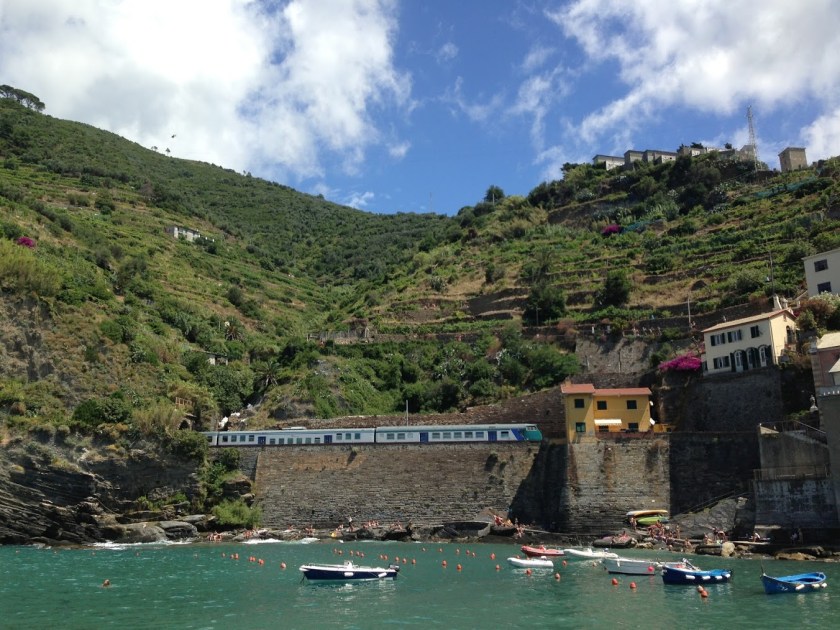
Hanging out in Vernazza’s harbour, looking up at the train tracks and tunnel halfway up the cultivated slopes, I tried to imagine a time before the railway. People would have had to walk between the villages, or go by sea, and when storms hit, each village would be isolated. The history of the land probably accounts for a resiliency and toughness in the bones of the residents whose families have been here for generations.
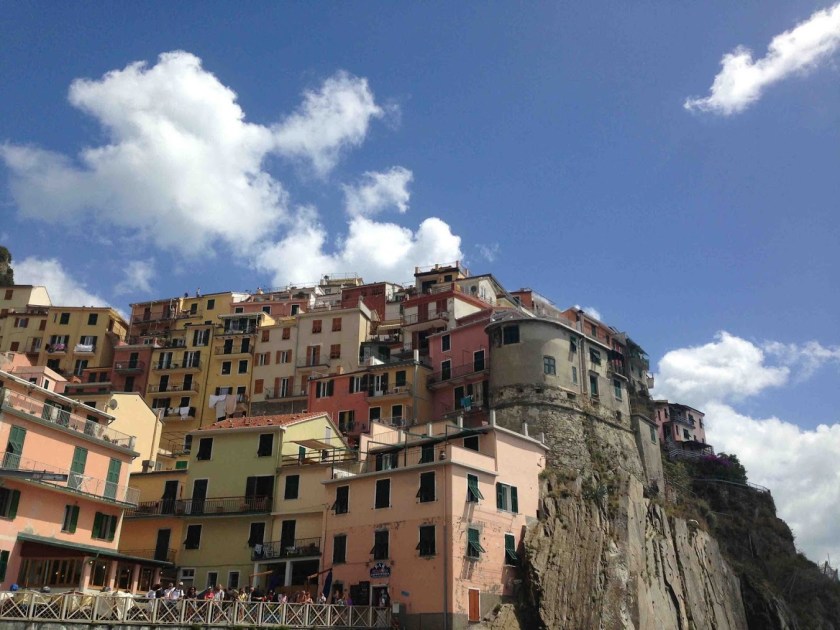
Cultivated terraces above Vernazza, and a train just emerging from the tunnel cut through the hills.Manarola
One is guaranteed a good workout here, since the villages are perched on cliffs and there are numerous steps going up or down the narrow alleyways. One of the villages, Corniglia, is perched in such a way that visitors have to contend with lots of steps to/ from the train station, or take a minibus.
Today the Cinque Terre is a short train ride (with regular trains) from the two main cities in the region – La Spezia which is well-connected to other major cities like Florence, and Genoa where the nearest international airport is located. La Spezia train station was a madhouse when I stopped there after leaving the Cinque Terre, with long queues at the ticket machines. If heading to other major cities, it’s easiest to book tickets in advance through the Trenitalia website (the main rail company).
I was fortunate enough to spend five days here a few years ago and found that, provided one is prepared for the tourist crowds, it’s still possible to enjoy ‘la dolce vita’ here. With nothing much to do except wander, take in the beautiful views, soak up the sun, eat and drink, it’s easy to let your life slow down. And it’s still possible to find pockets of tranquility and relatively people-free zones.
When the tourist crowds die down after the hubbub of a hot summer day and as the sun sets, locals spill out on the streets for the cherished Italian tradition of the ‘passeggiata’ – the evening walk when everyone is on the street to meet friends, chat and gossip. The village takes on a different, mellow character. As night fell, we sat contentedly by the harbour listening to the sea and watched the children playing under the watchful eyes of their chatty grandmothers and mothers.
Vernazza’s main square in the evening. Note the boat pulled all the way up to the piazza.
My friend and I travelled to the Cinque Terre from Marseille in France. We discovered that train connections between the south of France and this part of northern Italy weren’t as well-developed as we’d expected but we had a comfortable long-distance bus ride to Genoa from where we hopped on a train to Vernazza, our base for 5 days.
Which village to base oneself in is a big question in the Cinque Terre! We’d spent a considerable amount of time on this, one of the most important factors being the number of steps between train station and the lodging. We’d be schlepping our suitcases in the heat of summer and we weren’t exactly mountain climbers. And travelling during summer means accommodations are in high demand. I used a few websites to find accommodation options including the official Cinque Terre tourism website. The landlord of the apartment we eventually chose, told us the exact number of steps from train station to apartment – this included the steps from the building’s front door to our flat on the first floor. Obviously, this was a frequent query!
Why Vernazza? Well, Corniglia was eliminated because of the aforementioned steps. We decided against Monterosso and Riomaggiore because both seemed somewhat larger that where we hoped to stay. But mostly, we thought we’d found the right apartment at the right price point and location.
Our landlord, an elderly gentleman, met us at the train station and immediately offered to carry our suitcases. We refused because well, we couldn’t do that to a senior, right? But a couple of days later, we spotted him carrying large bags of domestic supplies down Vernazza’s main street, cutting an impressively strapping figure … Yes, there’s toughness in the bones of the people of the five lands.
Because of the apartment’s price point, we knew it wouldn’t be a luxury pad. It was much more like granny’s place – and the furnishings, kitchen appliances (and even the coffee pot) were suitably dated. Not a great surprise to me, as I had seen rentals elsewhere in Italy with furniture of similar vintage. The decor was completed by framed photographs of the Sacred Heart of Jesus and the Virgin Mary.
Cooking in our apartment with (ahem) retro pans on an old stovetop. Not forgetting the vintage toaster on the shelf.
At the time we went, there was no wifi and internet connection in the apartment, and no TV either. It did, however, come with a washing machine, one of the criteria in our accommodation search.
Some tourists stay in towns near the 5 villages (eg. Levanto, Portovenere, Santa Margherite de Ligure), but accommodation in these towns are not cheap. There are no large and grand hotels in the Cinque Terre because of the geography (small villages), and I was told that many lodgings didn’t have wifi because it was difficult to put the infrastructure in old buildings. We signed up for wifi access at the internet cafe on the main street just steps away from our building. In 2019, there’s now better and more wifi coverage and the province of Liguria has introduced free public wifi (yay) which can be accessed in the main squares. The Cinque Terre Card for tourists also includes free wifi access at the train stations.
Our apartment was in one of the characteristic narrow back alleys (“carugi”) in Vernazza. An easy walk through the main street, lined with souvenir shops, a bakery, and restaurants, took us to Vernazza’s pretty main piazza and harbour where all the action is: the restaurants are usually buzzing, and locals and tourists alike hang out at the harbour where there’s an impressive view of the cultivated terraces above the town. We could spot overheated tourists walking the trails above, and local boys repairing the ancient stone walls of the terraces. These wondrous terraces aren’t there for aesthetic reasons: some date from as far back as the 11th-century when the area was resettled after the Saracens were ousted and they were an inventive way of turning steep slopes into cultivable land.
Agriculture and fishing are still important here. Olives, lemons and grapes are grown. Ligurian olive oil is famous of course, and the Cinque Terre has its own local wine, the sweet white sciacchetrà. Sometimes one can spot a little ‘train’ among the vineyards running on its own tiny tracks – that’s the traditional way of moving crops on the hilly terrain.
A panoramic view can be had of the town’s surroundings and the sea from the Castello dei Doria, a short walk up many stairs from the main square. And even if you’re not religious, the church by the harbour, Santa Margherita d’Antiochia – built in 1318, is atmospheric and takes you back in time. There’s no shortage of atmospheric churches in the five villages.
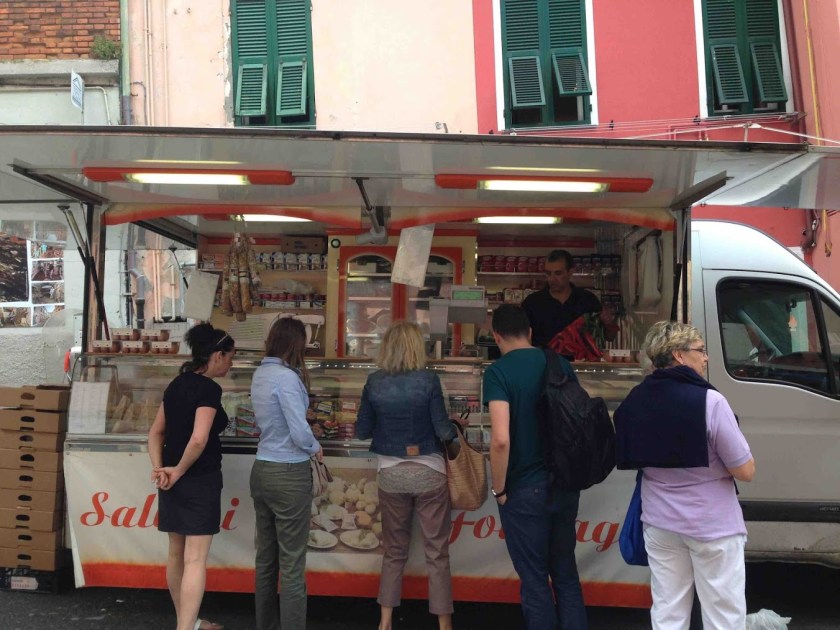
Once a week, there’s a market on Vernazza’s main street, and a chance to behold the rare sight of vehicles – small trucks and vans – in the town, selling meat, cheese, flowers, household goods and utensils and more. We were badly in need of a proper chopping board and queued up behind locals shopping for cleaning and household supplies at the back of a truck. This probably explains why residents keep home appliances and furnishings for years – one can’t simply drive a few minutes to the nearest mall! It’s a simpler life here. It’s also a life that’s closer to nature, however touristy the town has become. The world was reminded of that in 2011 when, after heavy rains, the area was devastated by floods. Vernazza and Monterosso were the worst hit –images of torrents of mud and water cascading down Vernazza’s main street went viral worldwide. Remarkably, the following summer, Vernazza ‘reopened’ for business – testament to the people’s resilience. In the bakery, there is a photograph of the owners, a husband-and-wife team, standing amidst the muddy remains of their shop in 2011. It stands as a reminder that nature is more powerful than we are.
Weather and sea conditions still dictate things here. While there’s a ferry that connects the towns (except for Corniglia, which has no sea access … we never did get to Corniglia in the end), it cannot run if the sea conditions are bad. We were glad that we were staying a few days, as the first time we tried to take the ferry, it wasn’t running even though it was a bright, clear day. Tickets were sold from a folding table at the harbour. The ferry was worth the wait: there’s nothing like seeing the gorgeous villages from the water, particularly on a sunny day. As of 2018, there are other travel options besides the train and ferry: tourists can also travel between the villages on a little tourist shuttle bus.
Huge waves! The ferry didn’t run that day.
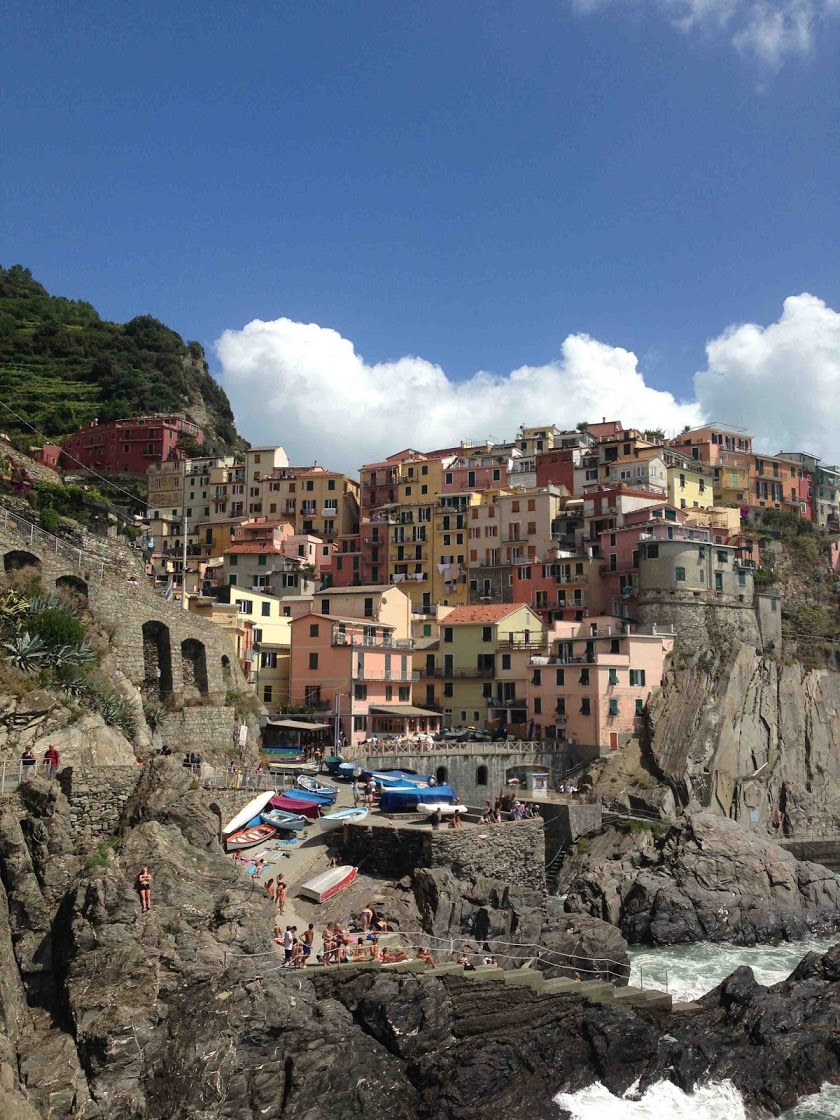
Riomaggiore and Manarola are remarkably pretty, colourful houses perched on cliffs and tumbling down towards rocky harbours. Those rocky harbours … with the inevitable tanned tourist bodies draped everywhere. We saw boats were pulled up halfway up the main street, a sign that the tides could run quite high here. We were mesmerised by the powerful waves smashing against the breakwaters and rocks … and saw daredevil swimmers jumping right into the waves.
Swimmers and sun-worshippers at the rocky harbour of Manarola
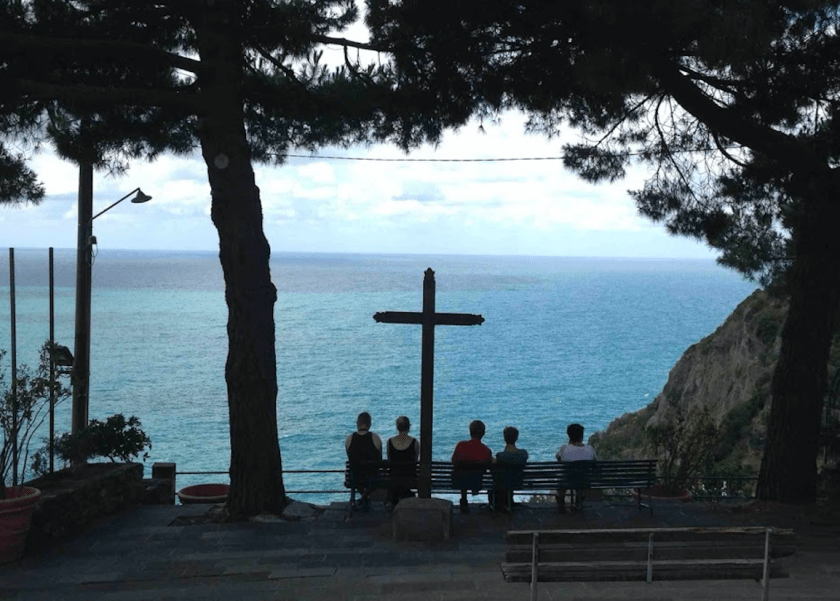
In Riomaggiore we drifted uphill away from the harbour and main squares, in search of more vivid views towards the sea. As we walked up the main street, the aroma of frying fish filled the air, drawing us to explore the ‘chippy’ shops that sell a selection of fried seafood – fish, calamari –in paper cones. Impossible to resist. We kept going higher and ended up at the ancient castle and the Oratory of Saint Rocco – a peaceful location. A cross set by the side of the cliff with a bench provided a spot for contemplation. The higher we went, the fewer the tourists.
At the top of the hill, Riomaggiore
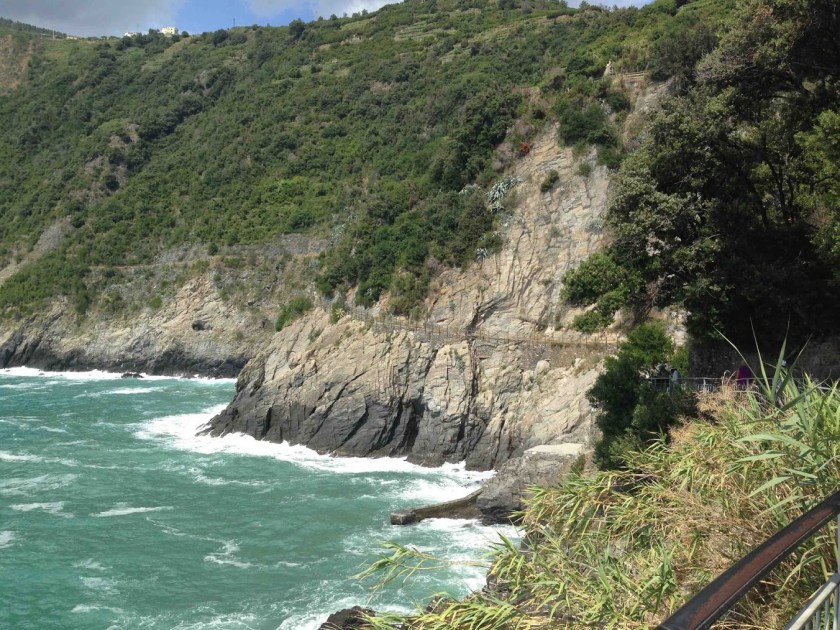
In Manarola, our wandering took us out on a trail hugging the coastline; as we walked along the trail the crowds eventually disappeared, and then, dark clouds came rolling in. Even though it was the height of summer, the sky was constantly changing character, making for interesting views of the villages in different lighting conditions.
Trail leading out of Manarola
The most famous walking trail in the Cinque Terre is the “Via dell’Amore” which connects Riomaggiore and Manarola. It’s only about a kilometre long and is mostly paved. However, it was closed when we visited. Weather conditions at play again! The trails often need repairing and are occasionally washed out by the rain. Walkers and hikers are advised to check on the conditions of the trails with the tourist offices at the train stations before venturing out. A National Park fee is charged for the main trails, with the fee going towards maintenance of the trails. Secondary trails leading inland up into the hills however, are free. These trails lead to ‘sanctuaries’, small churches in the countryside.
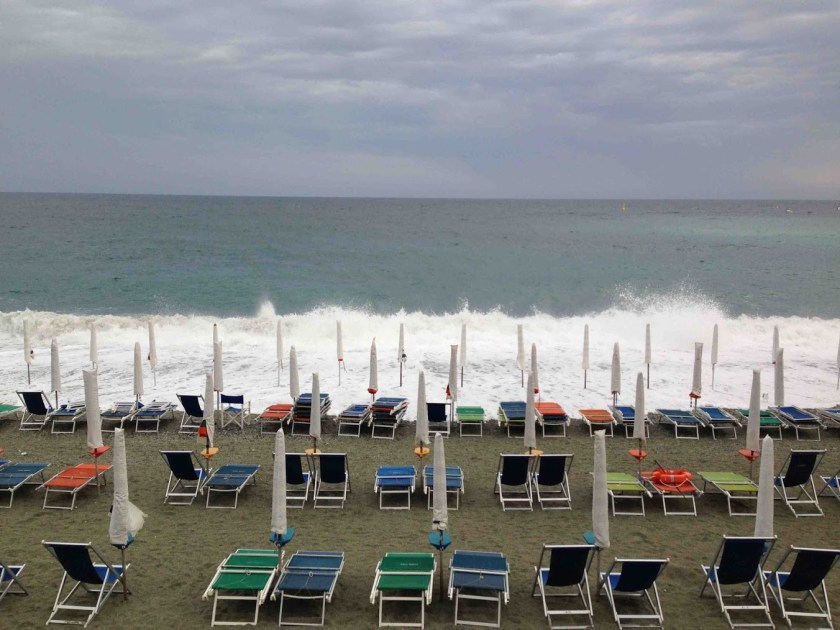
Monterosso is the only village where there is a wide expanse of sandy beach, practically outside the train station. The other villages (except Corniglia – again) have rocky beaches and swimmers and sunseekers also enjoy the sun on the rocks at the harbours. In Vernazza, in addition to the harbour there’s a small cove with a rocky beach. The Monterosso beach is lined with colourful beach umbrellas and deckchairs and flanked by beach clubs, and looks like a typically European beach. Although technically speaking all beaches are free, private concessions operate along stretches of Monterosso’s beach, meaning that beachgoers have to rent deckchairs and umbrellas. However, there are areas where the beach is truly ‘public’.
Beach at Monterosso, on a cloudy day. Look – no tourists!
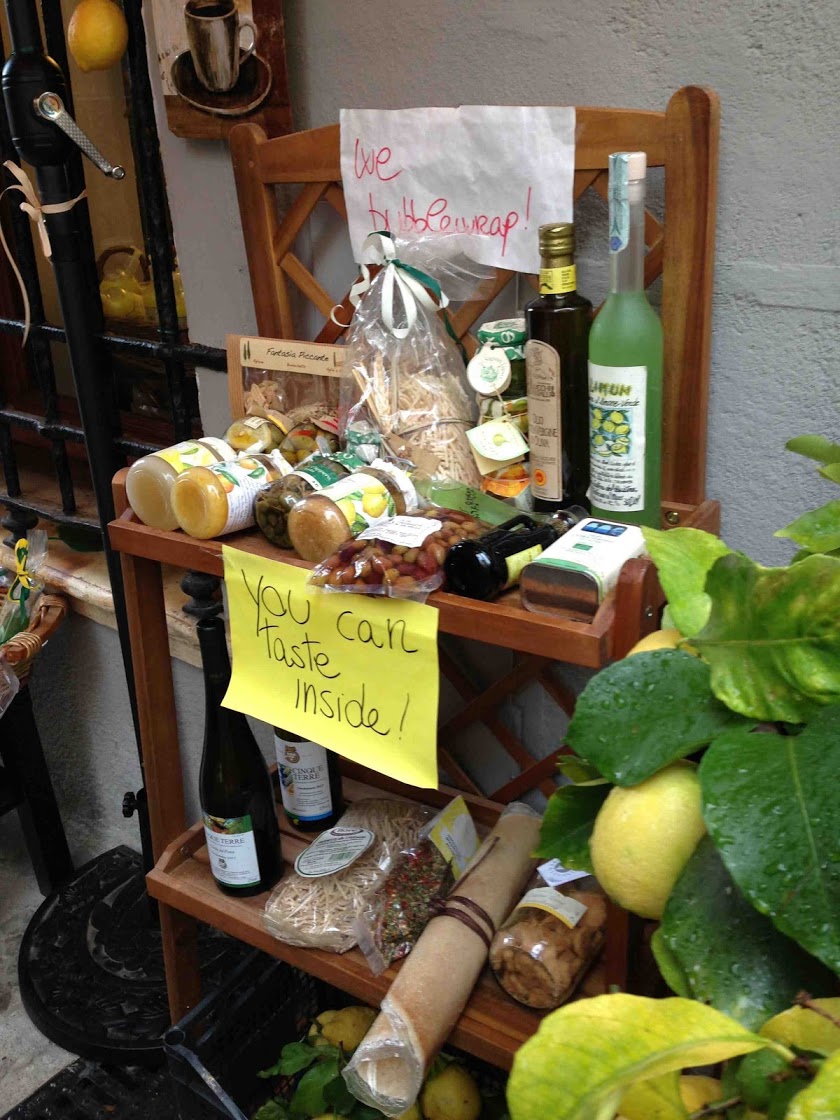
An attractive promenade runs parallel to Monterosso’s beach. We walked past the beach and through a tunnel to the old town, a warren of streets full of shops that should please any tourist in search of mementoes. We spent a couple of hours browsing through a plethora of ceramics, olive oil, pasta and pasta sauces and other typically Italian food products, chatting with the shop owners. For self-catering visitors, this is a great place to pick up local food supplies too: there’s at least one fresh pasta shop, the grocery stores are quite well-stocked and we bought freshly-made pesto for our dinner.
When it comes to food, of course one has to eat fish in the Cinque Terre! Fresh anchovies are a typical speciality of the region, and are nothing like the ones I see at home – those harsh salty little things in a tin. They’re often fried and served with a squeeze of lemon. An interesting fish dish I tried was a fish tortelloni – little pasta parcels stuffed with a white fish and served with a tomato sauce, which initially sounded just wrong to me, but turned out to be delicious!
Fresh gnocchi and pesto
The local pasta is the small, twisty ‘trofie’, suitable for pairing with the region’s famous pesto, a sauce made of basil, olive oil and pine nuts. Focaccia, now a staple in cafes around the world, also originated here, where they’re brushed with oil, topped simply with olives or sundried tomatoes and baked. For an aperitif, there’s limoncello – a liquor made with lemons. And the local wine is the sweet sciacchetra.
We had quiet evenings once we got back to Vernazza each day, which suited us just fine. Each village does have a few bars / cafes, some of which have a programme of live music, but we were happy to just sit outdoors in the cool evening and observe village life. We were there during the soccer World Cup and as we didn’t have a TV set in our apartment, went around the village looking for a bar or restaurant which might have a TV and screen the matches … no luck, until someone ‘in the know’ pointed us in the direction of a small house off the main square. There was no signage over the door, and it was locked during the day. It was a different story at night: it was a local club of sorts. Rows of chairs were laid out in front of a TV screen, and the small bar was manned by a middle-aged man. The chairs gradually filled with locals and tourists, eagerly awaiting the game of the night. Sadly, the European tourists outnumbered, outcheered and outshouted the locals, and I wondered if we were invading a cherished local social space, even though the local people treated us with courtesy.
View of Vernazza, from one of the trails
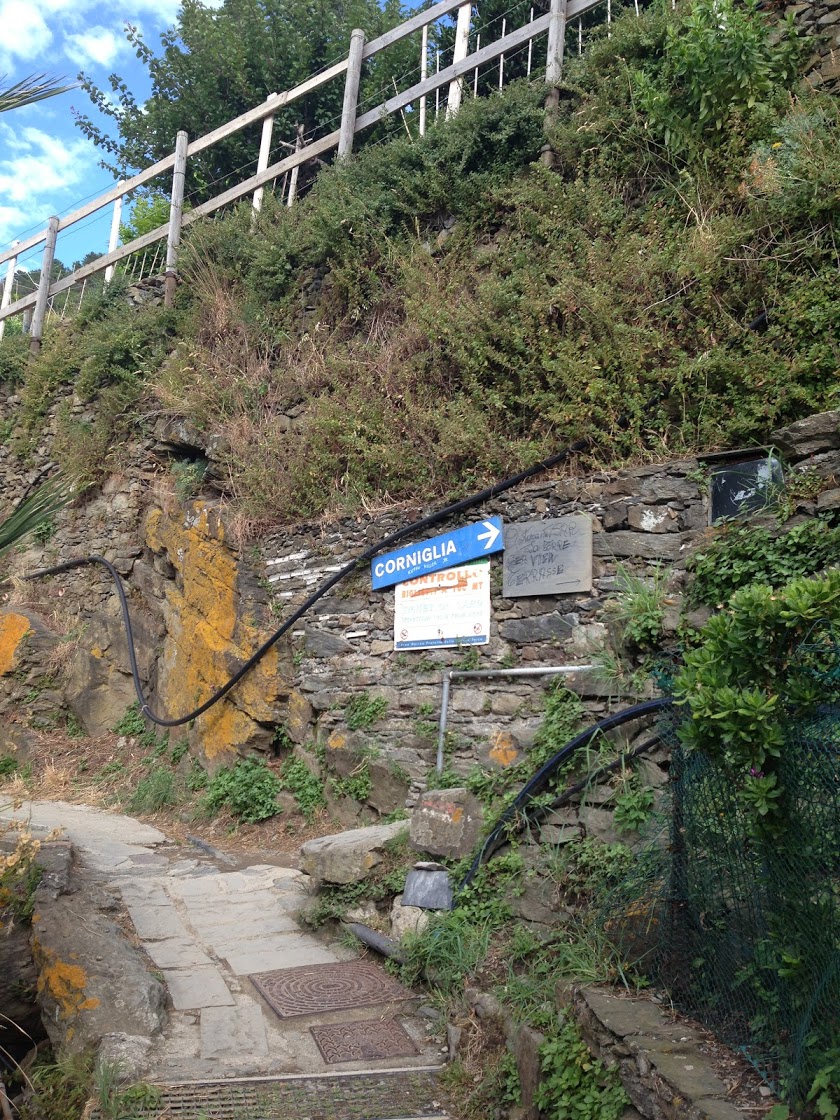
One lazy afternoon in Vernazza, we decided to just wander, and found ourselves partway up the trail towards Corniglia (and we still didn’t make it all the way there). To my surprise, we were practically the only ones on the trail. Perhaps it was too hot and everyone was having a siesta after lunch. What a pleasure it was to slowly walk, turn back, and watch the village fall away below, a little smaller each time you looked, and the sea sparkling in the sun.
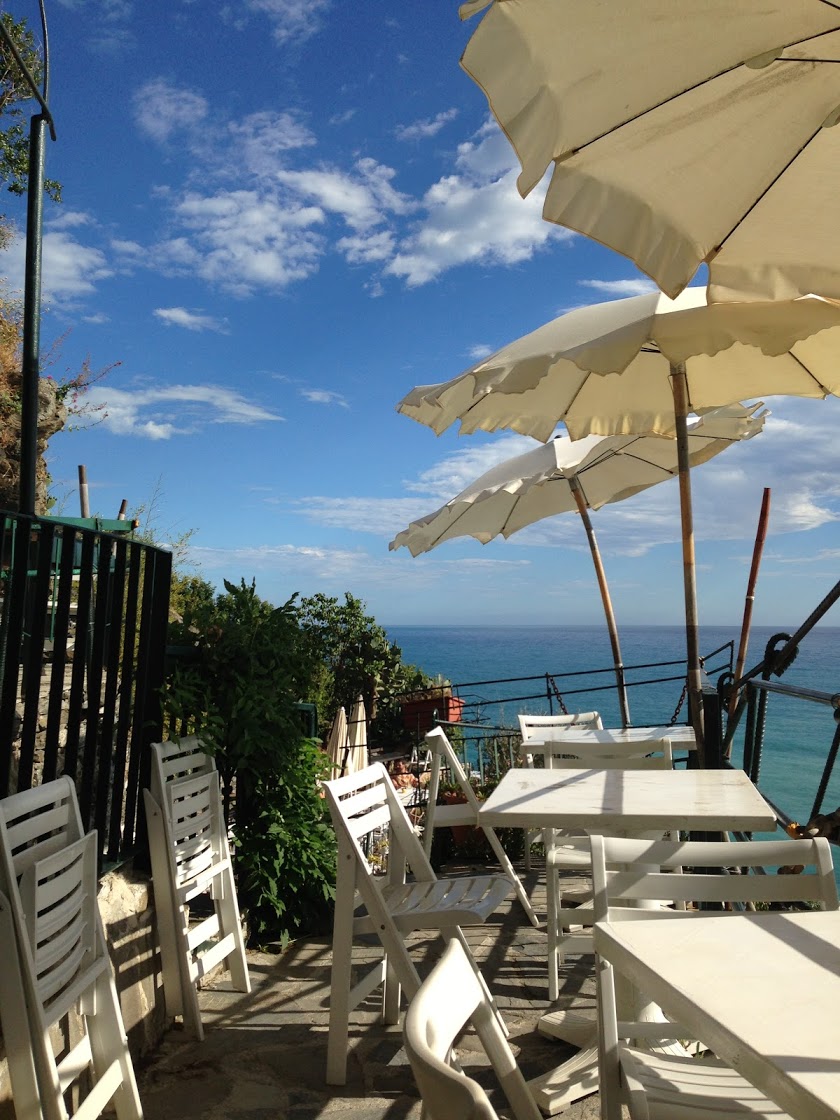
Cafe halfway up the hill … where are the crowds?
I felt like I had all the time in the world. As the afternoon temperatures soared, we stopped at a cafe with a gorgeous view out to the sea, where there were only 2 other customers. Sipping our fresh orange juices in the afternoon sun, the only words that came to mind were “la dolce vita”. Bliss.
It was actually possible to escape the crowds in the Cinque Terre, after all. One just had to walk, wander, look around, and take your time to savour each sight, sound, and taste. And perhaps one day, I will get to Corniglia.
Thanks to budget airlines, Ho Chi Minh City is now a regular weekend getaway for Singaporean working adults and ‘aunties’* alike. When even my mother’s friends go regularly, I knew I was already late to the table when I finally visited in 2013 with my friend S. We wanted to have a taste of today’s Vietnam (literally and figuratively – S researched what to eat and where to eat it) and could only afford a few days away, so chose to visit just one destination. We came back gushing to family and friends about our weekend, which turned out to be quite relaxing, despite the frightening traffic in the city.
The first thing we noticed was naturally, the motorcycles! The battalions of motorbikes at every traffic light were quite intimidating. On the way to the hotel from the airport, we were caught in heavy traffic. As we inched our way across a traffic intersection, the lights changed and the phalanx of motorcycles that had stopped at the lights, started moving – and looked like they would head directly INTO our car in a couple of seconds. Looking out of the window, I looked straight into a motorcyclist’s eyes … Miraculously, all the vehicles negotiated safely around our car. That, I supposed, was par for the course here.
Our first time crossing the street was just as intimidating. Even though you know the trick is to find a gap in traffic and walk confidently and quickly across – take the plunge and don’t turn back! – it wasn’t easy the first time. Eventually, we got better at it. One night, we walked quite a distance looking for a particular eating place, eventually losing our fear of crossing the streets.
I had read in a guide book that if there are policemen on the side of the street, you could ask them to help you cross, which we did a couple of times. They turned out to be quite chatty, acting more like tourism ambassadors than cops.
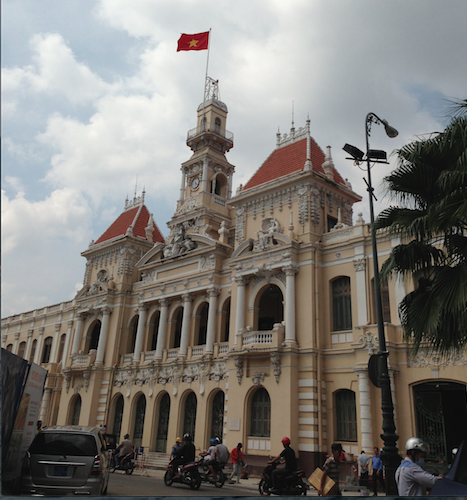
The ornate People’s Committee Building
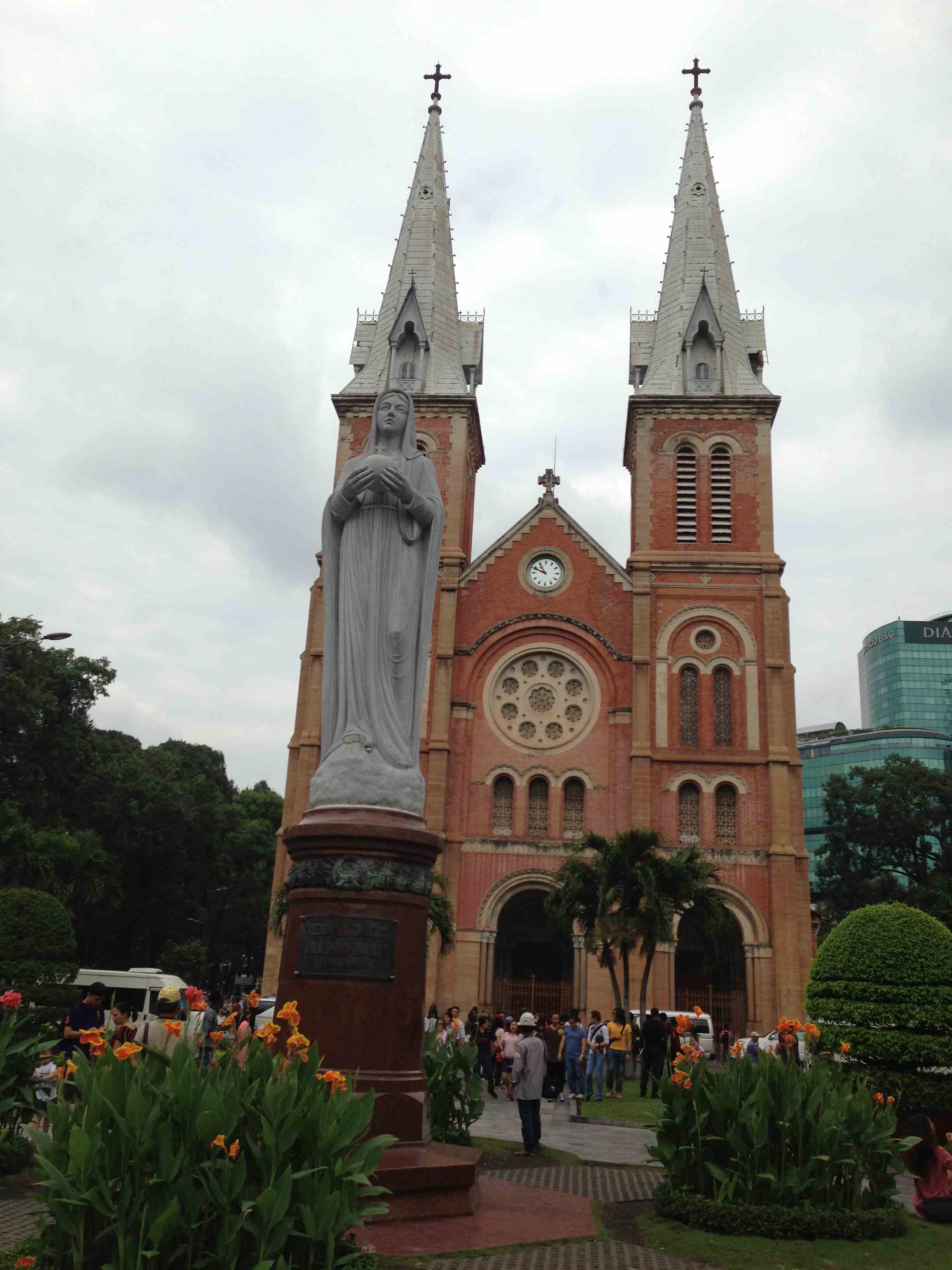
We stayed at the Saigon River Hotel, a small hotel in District 1, the city centre. It’s near Dong Khoi Street, the hub of the centre, where there remain examples of French colonial architecture. The first thing we did was walk around the area, visiting the Opera House (we tried to get tickets for the ballet, but it was sold out) and passing by other large buildings such as the impressive People’s Committee Building, formerly the Hotel de Ville. It’s not far from the Notre Dame cathedral, an unmistakable landmark in the area and a popular spot for wedding couples to take photographs. In front of the cathedral is a little park with a statue of the Virgin Mary – a souvenir photograph spot. We attended mass at the cathedral before we left the city, where I bumped into a former student as we lined up for communion – yet another Singaporean here for the weekend.
Notre Dame cathedral
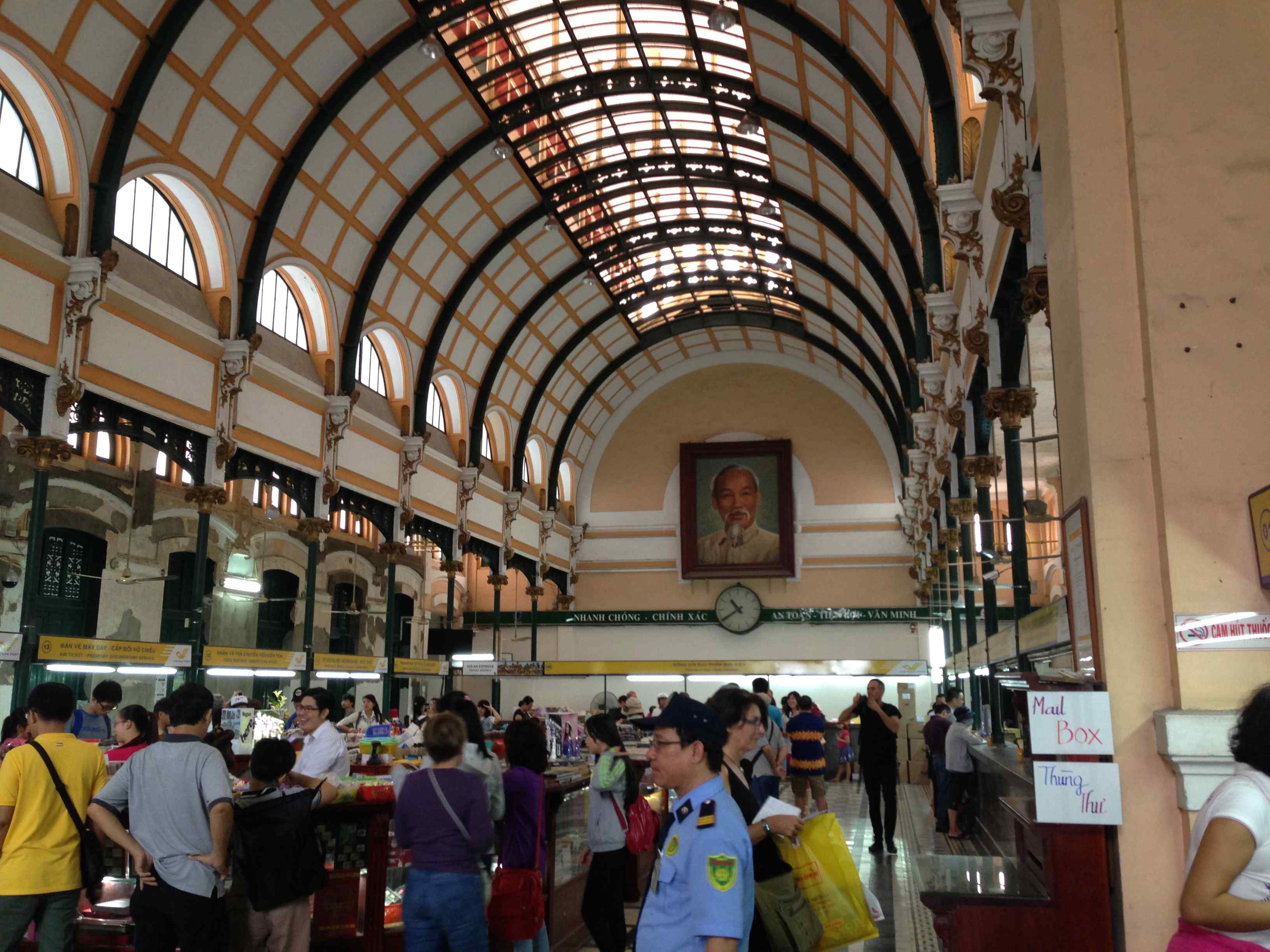
Next to the cathedral is the French colonial-era Central Post Office, dating from 1886 – 1891, and designed by Gustave Eiffel, the same man behind the Eiffel Tower. It’s a gorgeous building that looks like a Victorian-era railway station. Inside, high arched ceilings create a wonderful sense of space. On the walls are two large handpainted maps of the city and its surroundings in the 1890s. The post office counters are still fully operational and there are quaint old-fashioned telephone booths too (which now contain ATMs). A large portrait of Ho Chi Minh looms over the proceedings.
Ho Chi Minh himself looms over proceedings at the General Post Office
Another famous tourist site is within walking distance – the Reunification Palace. You can’t miss it, with its large grounds and front lawn with a fountain. It was formerly the residence of the French Governors General, and also the home and office of the president of South Vietnam during the Vietnam war. The structure was rebuilt in the 1960s after it was bombed in 1962 by two South Vietnamese pilots, and visitors will have a glimpse of the past when visiting the Palace today. It looks frozen in time: the huge reception rooms for important guests, furnished in a pompous (almost kitschy) style, and the presidential quarters which look like they had been recently vacated by someone trapped in the 1960s. Some travel sites have compared this place to a set from a James Bond film, which I agree with, but I find this also a tad disturbing, considering the violent history associated with the palace. We stepped out onto the balcony overlooking the front lawn and took some photos, watching the endless traffic flowing past beyond the fences.
Reunification Palace – the front lawn
In the grounds of the palace are two potent reminders of the Vietnam War or American War: an F5E fighter plane that took part in a raid on the palace in 1975, and the tank which smashed through the iron gates on 30 April 1975 – the moment when the South fell.
The other important site of war memories is the War Remnants Museum.
Yes, we all want to have our photos taken in front of a war museum. Preferably smiling, and with a fighter plane or other weapon of war.
In the grounds are displayed vehicles of war – fighter planes, helicopters and boats, with snap-happy tourists posing beside them. Once inside the museum, the mood quickly turns somber. On the ground floor is an exhibit of photos and posters showing support from around the world for the Vietnamese in their fight against the Americans. Upstairs, there are harrowing photographs of the war and its victims, including those who are still living with the effects of Agent Orange. The captions in the exhibits are written from an entirely Vietnamese point of view, with a propagandistic, nationalistic and distinctly anti-American tone which barely hides the bitterness. Having known the War mainly through American movies and media, I have to admit this was a huge jolt to the system, but it was very educational as it gave an insight into the scars left by the conflict on this country. The final exhibit we saw however, brought a strange balance back: a poignant exhibition of war photographs taken by American photographers who were killed ‘in action’.
We definitely needed some calming moments after the Museum, and headed to a nearby café. There are cafes dotted everywhere in the city and it’s quite pleasurable lounging in a sofa (if there’s one), having some strong Vietnamese coffee, watching people, cars and bikes go by. More about coffee later …
Whiling away the time with strong Vietnamese coffee at Baka Coffee.
Ho Chi Minh City is divided into districts. Most places that tourists are likely to visit, are in District 1 and District 3. That’s why we chose to stay in District 1. Our hotel is called ‘Saigon River’ for the obvious reason that it’s near the river, which can be glimpsed from the rooftop terrace where breakfast is served. We liked the hotel very much. Our room was plainly furnished, not quite with the same snazzy ‘cool’ décor as in the hotel lobby which was quite impressive for a small hotel. The lotus plants outside the main entrance were a nice touch; and that scooter parked in the lobby? Almost too hipster.
The hotel lobby looks pretty trendy and funky
But best of all were the staff at the hotel who were unfailingly courteous and helpful. One of the staff had been to Singapore and was happy to chat about Mustafa Centre and the expensive hotels in our hometown. What a contrast to HCMC – we paid just S$60 per night for our room. Before we arrived in HCMC, we booked an airport pickup from the hotel and the hotel made it a point to inform us NOT to pay the driver directly – since they’d already made arrangements and did not want their guests to double-pay the driver.
Which brings me to: taxis. I’d read all about how taxis were not rigorously regulated in Vietnam, and how drivers often try to pull a fast one on tourists. You can’t avoid taxis as those are your best bets for getting around, unless you hire a motorbike. We followed advice on using taxis from two particular companies, Mai Linh and Vinasun, which are apparently more reliable. Regular travellers would be familiar be some of the scams, practised by taxi drivers around the world: a driver might not give you the exact change for your fare (and with all those zeroes in the Vietnamese dong, it’s easy to be confused); or, a driver may insist on taking you sightseeing and bring you to shops where he receives some commission; or, a driver may take a longer route or worse, threaten you if you don’t pay the higher fare he eventually charges. One evening, we took a cab which had a metre so we thought, “ok we’re not likely to be ripped off”, but the metre actually jumped at an exponentially higher speed than other taxis we’d taken, and we knew we were paying almost twice as much as we needed to. To fellow tourists, I would say: be careful when taking cabs, stay alert, and don’t show the driver how much money you have in your purse. And when you hand over the money, do what some travel writers advise: count the notes out loud – make sure you say “50,000 dong” or whatever.
You might lose some dong, but luckily you won’t feel too poor as it’s possible to eat well on a tight budget. We ate at small restaurants serving traditional Vietnamese street food, using recommendations from the Eating Saigon blog. These small establishments serve or specialize in just one type of dish. We had excellent beef pho (soup noodles) at Pho Thanh Canh in District 1, which we ate sitting at a table on the sidewalk and tried out all the condiments on the table – there was one which gave a particularly nice kick to the soup. Across the street from Thanh Canh was a small coffee place which to our surprise, had the most delicious coffee with a distinct caramelly taste. In fact, the coffee was so nice we went there twice!
We also ate at Banh Cuon Tay Ho, which has been proudly serving banh cuon for 50 years. A lady sits at the front of the shop at the stove, cooking the banh cuon.
Banh cuon with a side of mystery meat
Banh cuon is the Vietnamese version of what we Cantonese Chinese might call chee cheong fun: rice rolls filled with pork, topped with chopped fried onions and beansprouts. It’s served with a side of what I called ‘Vietnamese mystery meat’ – a spam-like slice, and a rice cake with mung beans, wrapped in leaves. Add condiments to spice up the taste. We weren’t sure what we’d ordered as the lady taking orders didn’t speak English and we didn’t speak Vietnamese. I think she figured that she’d just serve us the ‘classic’.
We also had bo kho (beef stew) in a hard-to-find streetside shop, served with baguette, and an excellent banh mi (baguette sandwich filled with cold cuts, pickled vegetables and pate – such a delicious combination). Vietnamese baguettes are famous of course, a legacy of French colonial times.
I ended up being a fan of Vietnamese coffee. It’s sweet and caramelly yes, and I normally don’t take my coffee too sweet, but the combination of aromatic beans and sweetness seemed just right. On our last morning, we wandered around the area near our hotel, and decided we wanted to try some pastries/ confectionery. We stopped at a cute café and ordered cakes and coffee and whiled away the rest of the morning there.
Finally, a word about the Vietnamese water puppet show, which we both totally enjoyed. Yes, it’s touristy and probably a watered-down version of the original folk art, but the noisy, cheerful music and scenes made us happy. The water puppet show is in a theatre that seems to be part of a community centre or club – at the back there are tennis courts, and in the same building there was a dance exercise class going on. We wandered round the building looking at all the activity. It all felt familiar to us: at home, our community centres also feature a mishmash of activities.
We thoroughly enjoyed our time in Ho Chi Minh City, even though it felt like we didn’t do too much. We’d thought of visiting more places, such as the Cu Chi tunnels, but in the end just got lazy … and soaking up the city seemed a more pleasant way to pass our weekend. The next time, I told S on our last day, I’d like to try a scooter tour. We’d overcome our fear of the motorbikes and noticed that they didn’t actually go very fast on the streets – they can’t really, because of the sheer numbers of bikes in every lane!
Ho Chi Minh City, HCMC, Saigon – I can understand why Singaporeans like visiting. Apart from the friendly prices, it’s fairly safe, it’s a city like our hometown, and there’s plenty of shopping and eating. A perfectly suitable Aunty* destination.
*Aunty = a Singaporean term for a middle-aged lady (usually one who’s streetsmart, quite formidable, and knows where the best deals are).






















 travelingpiscean.com