Melbourne: laneways, cake & coffee

Just a few photographs from a recent brief visit to Melbourne. It’s been more than 15 years since my last visit and boy, has the city been transformed. Memories from this trip: street art, laneways, cakes and coffee …

IMG_6633
Cafes are already open for breakfast at 7 am!

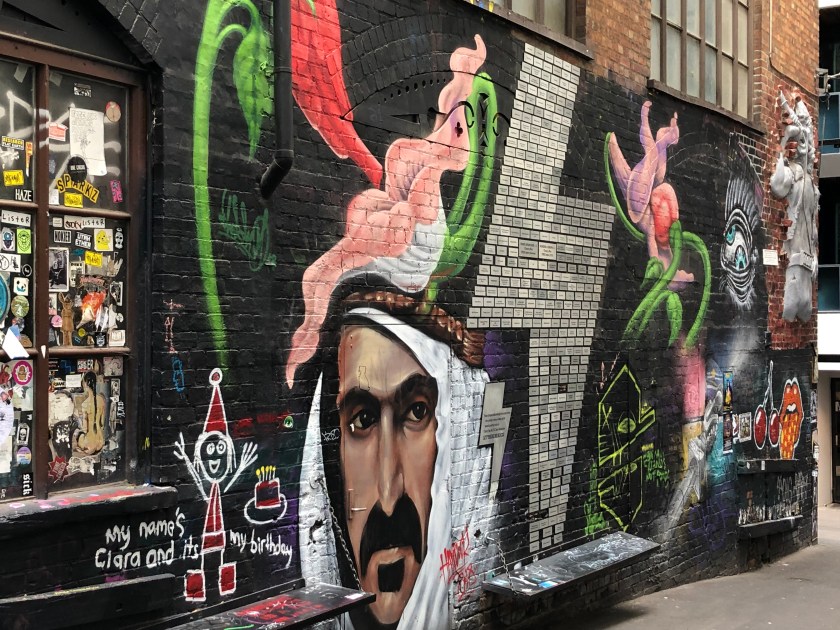
Melbourne’s street art is one of the city’s top tourist attractions. Over the past 20 years, the city’s street art scene has flourished. As early as 1984, Keith Haring had actually painted murals in the city. Of course, street artists never intend to create tourist attractions; just like anywhere else in the world, empty city walls were a way for them to express themselves, ‘talk’ to one another and ‘to’ the city using images and tags. Melbourne’s network of alleyways and hidden backlanes provided a ready canvas while the city’s dynamic arts and cultural life had always attracted artists. The tourism authorities naturally, latched onto street art as a way to promote the ‘hipness’ of Melbourne – using it for ‘creative tourism’, which purist aficionados and street art practitioners view with some suspicion. Urban underground art and tourism do not make the easiest bedfellows, as discussed in this article.

IMG_6535
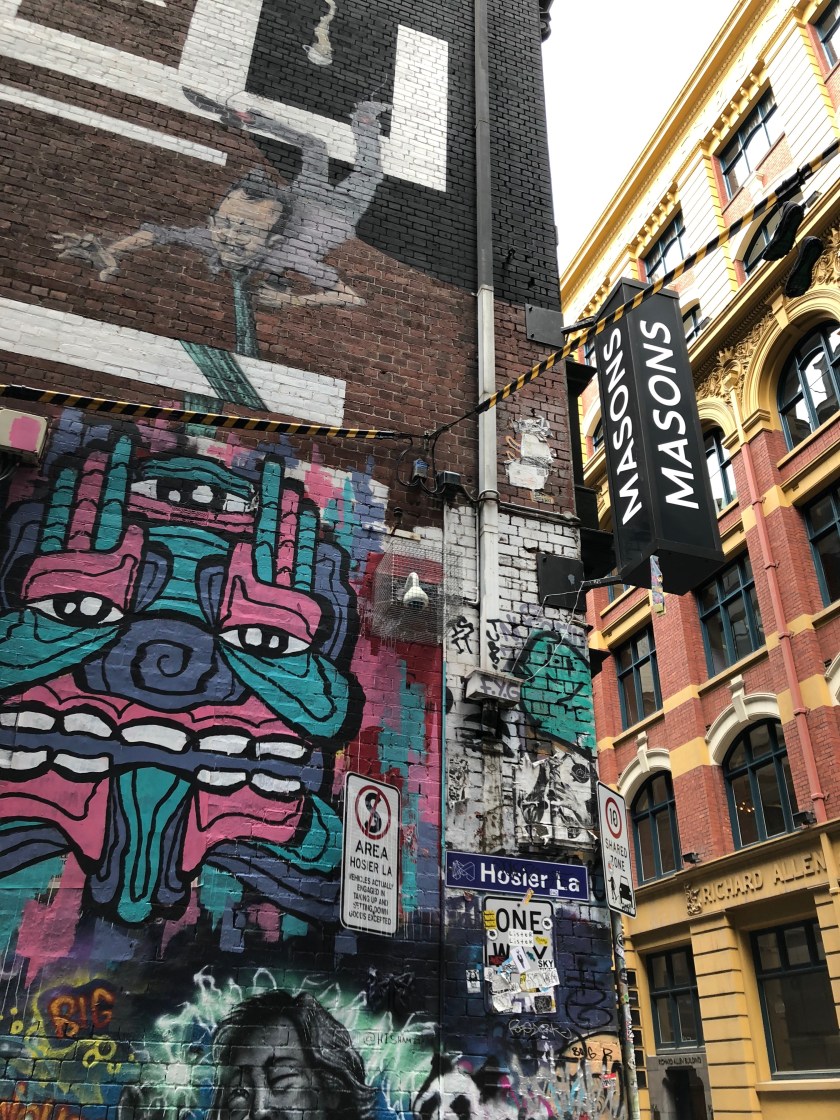
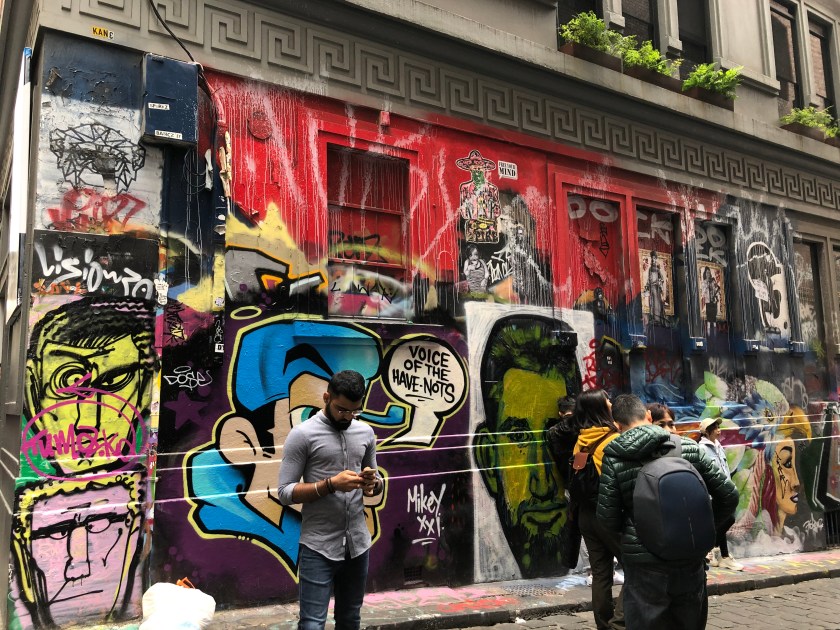
Hosier Lane – probably too famous for its own good.

When I got to Hosier Lane, I was surprised at the crowds there. There were tourists of different nationalities and ages, all taking photos and videos, no doubt to be shared on millions of Instagram feeds. It was quite difficult trying NOT to be in other people’s photographs.
IMG_6506

IMG_6504

IMG_6526
Almost hidden in the colourful alley is a social enterprise cafe, Good 2 Go, which supports training, employment opportunities and other services for people at risk including the homeless. I hope some tourists get their coffees there and support a good cause!

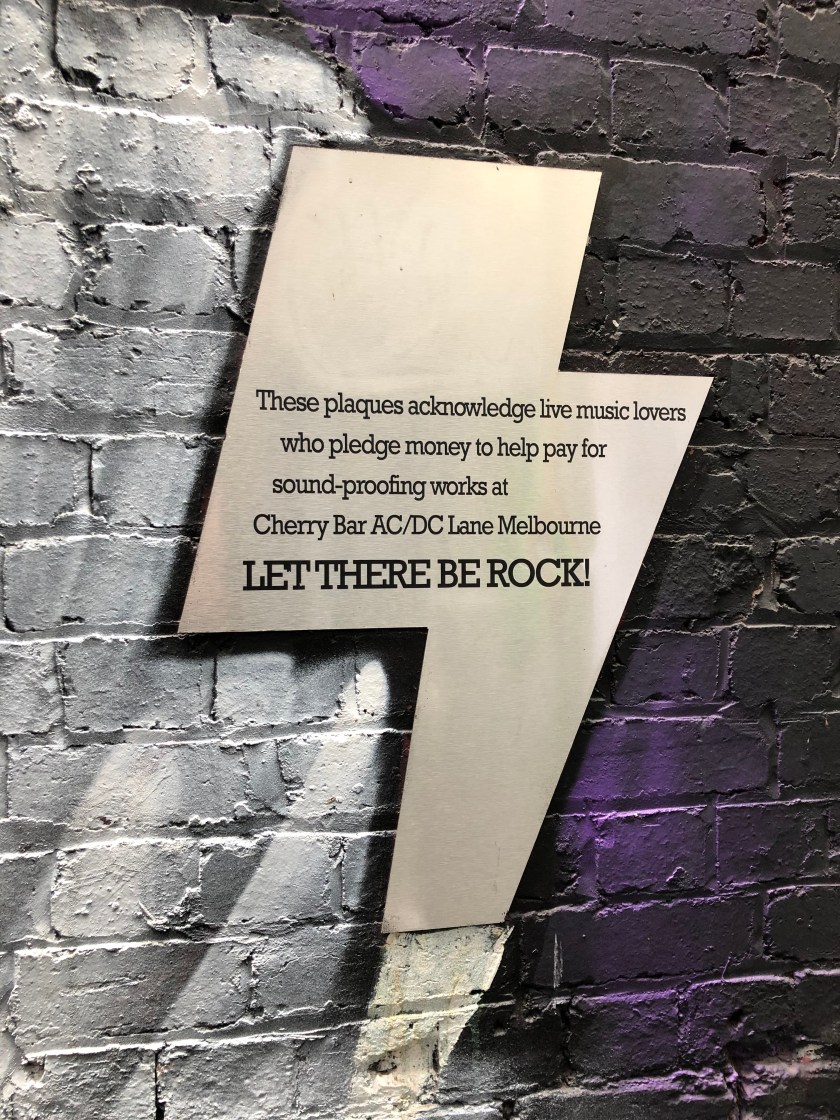
Wandering through the city centre, I made my way to AC/DC Lane – named after the rock band as a tribute, which I thought was a cool thing to do. It was surprisingly empty.
IMG_6566IMG_6574

IMG_6571

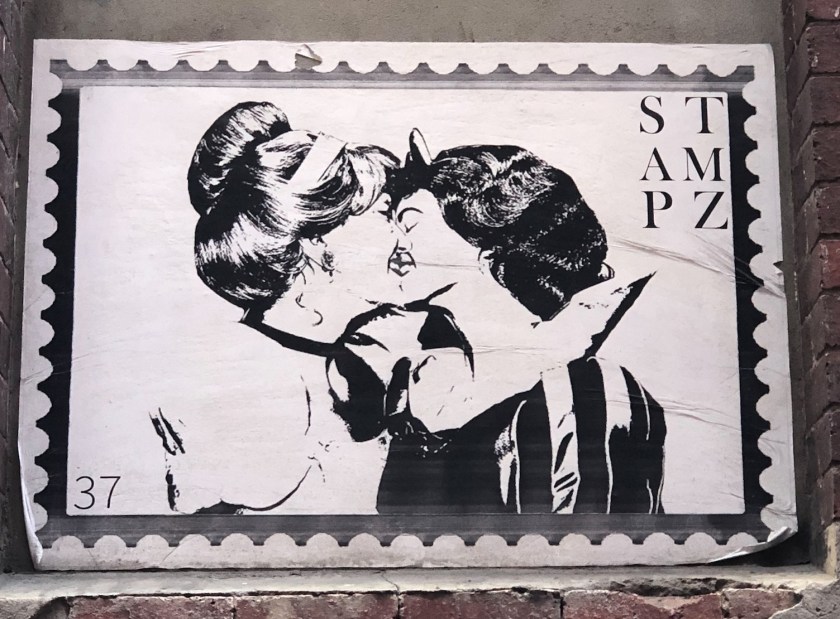
Stampz

IMG_6560

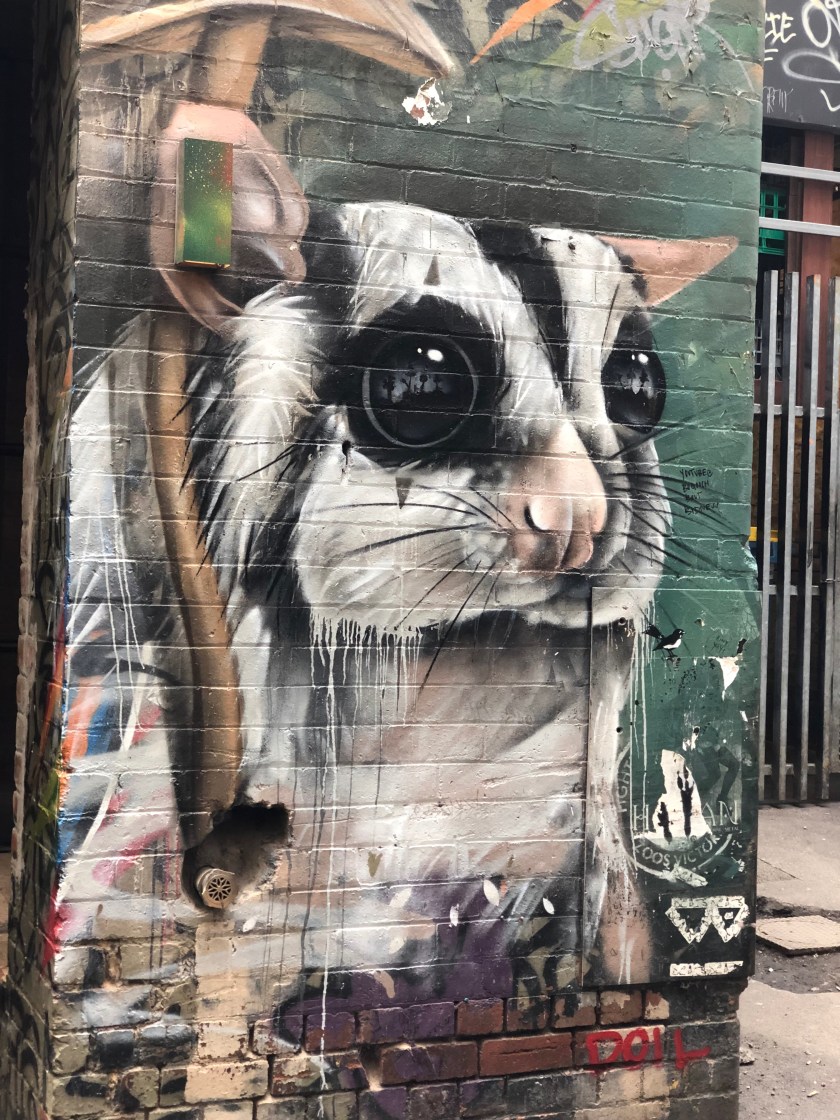
The street art is varied, from painterly murals to tags to stencils to posters, which makes it visually interesting. It’s hard not to look like a tourist when you’re stopping to look at the walls all the time.

IMG_6479
Degraves Street – usually busy, it’s lined with restaurants and cafes. 

“Laneway culture” is another aspect of Melbourne / Australian city life and has become another tourist attraction. Basically, laneways are the alleys between buildings in the city centre which provide ‘backdoor’ access to the buildings. In the past, the city centre was pretty quiet at night and so were these alleys. But in the 1990s during the recession, young entrepreneurs started businesses and cafes in these lanes to take advantage of cheap rents. Laneways now house eclectic shops and boutiques, bars, restaurants, cafes and with their buzzy atmosphere, are very much part of the city’s urban renewal. I was in Adelaide two years ago and saw laneways there buzzing with bars and restaurants too.

IMG_6631

IMG_6494 (1)
Loved the coffee at Duke’s Coffee Roasters. Picked up my cuppa at 7.30 in the morning.

Melbourne is also famous for good coffee, and it seems there’s a coffee joint on every street. Rejoice, coffee lovers!

Cafes are open early for breakfast, and the menus looked familiar … avocado on toast, eggs benedict, pancakes, the classic fry-up … Basically, the same as the brunch menus at trendy cafes back home in Singapore. So that’s how our brunch trend started – which really shouldn’t surprise me since so many Singaporeans study in Melbourne or holiday there, and Australian chefs and restarauteurs have made their mark in Singapore’s dining scene.

IMG_6612
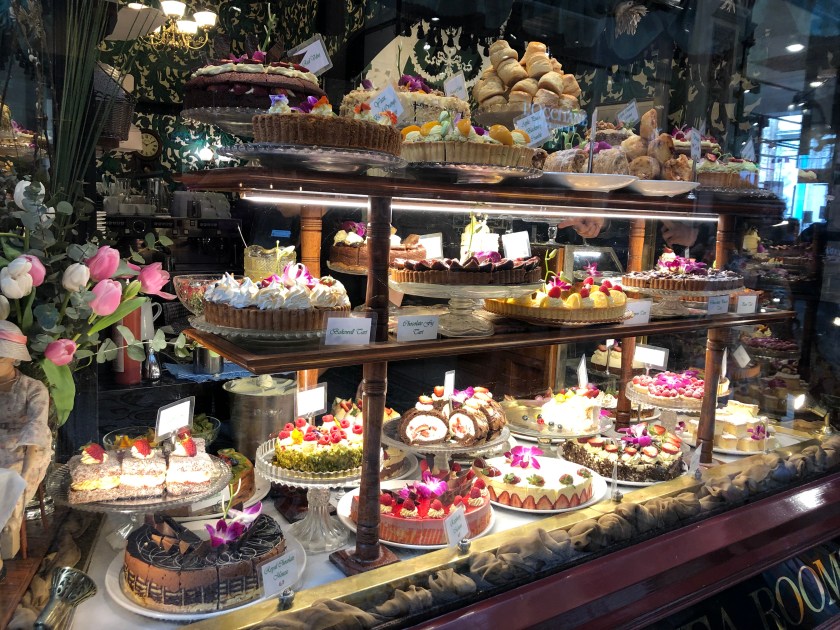
Lusciously tempting cake display at Hopetoun Tearoom

I wandered through The Block Arcade on Collins Street and admired the astoundingly pretty cake display in the window of Hopetoun Tearoom. Found some inspiration for possible future homebakes!

Actually, The Block Arcade and other similar ‘malls’ that straddle parallel streets, are the originally ‘laneways’ dating from the 19th century. They’re essentially covered pedestrian lanes lined with shops – very useful on rainy days, and architecturally appealing.
IMG_6607

Cuppa
Brunetti’s – a long established Italian eatery and bakery in the city centre with a huge selection of Italian cakes, biscuits and pastries. 

Melbourne has also earned a reputation as a dining city. When I got off my flight from Singapore, I overheard fellow passengers planning what to do for the day: head out to lunch at a well-known restaurant, go shopping and buy chocolates, take a coffee break at a famous cafe for its famous coffee, look for the famous apple strudel (apparently, a trending thing among a particular demographic of Singaporeans).

There’s certainly no shortage of places for dining and drinking. Wandering along the South Bank, across the Yarra River and back to the City Centre in the evening, there was an unmistakeable vibe of ‘the good life’ from the lights and music of the bars and restaurants, and everywhere the buzz of happy conversation.

These attractions make Melbourne a great weekend destination. Apart from these, there’s still other places to visit – galleries, museums, the botanic gardens, and more.  Well, there’s always next time …
 

Mekong Delta – where the land and waters provide


Rowing

When I was a child, we learnt a song in school that went: “planting rice is never fun, bent from morn till set of sun …” I remember singing this on road trips in Malaysia as we passed by field after field of rice paddies and the occasional water buffalo. Today though, these views have been replaced by oil palm plantations, their endless rows of palms marching inexorably into the distance. Those childhood drives through rice paddies came to mind in the Mekong Delta as we passed by jade-green rice fields. The cultivation of rice is just one of the agricultural riches that we owe to the great Mekong, Southeast Asia’s longest river.

The Mekong, Southeast Asia’s longest river, runs for 2700 miles through China, Myanmar, Laos, Thailand, and Vietnam, emptying into the South China Sea in the delta. It’s the lifeline of millions of people in the region and beyond, and you truly get a glimpse into the bounty and might of this river on a visit to the Mekong Delta in South Vietnam. Here, the river finally reaches the sea through the delta lands, crisscrossed by numerous channels and tributaries – a rich agricultural landscape where gave me a deep appreciation of the source of the food we eat every day. In addition to the paddy fields, there are lush fruit orchards (oranges, dragon fruit, durian, mangosteen, coconut and more). The area is also famous for the floating markets.

We had a motorcycle tour through the villages. As we wound our way through the paths, we heard loud sounds of chirping swallows – but they weren’t coming from real birds. The cultivation of bird’s nest has become quite the rage here because of the profits to be made, and farmers have built tall barns for swifts to nest in. To attract the swallows, the farmers broadcast the calls of the swifts on outdoor sound systems.

IMG_8572

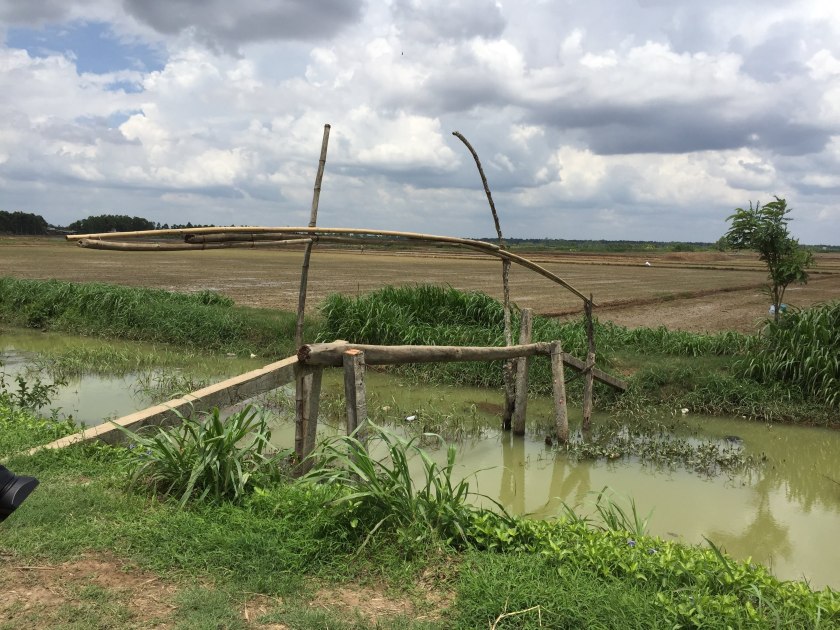
We saw rice fields up close, the bikes carefully navigating narrow paths between the paddies, the sun beating down on our shoulders. In the midday heat, dragonflies floated overhead. We passed by monkey bridges spanning ditches among the cultivated fields – I have no doubt that crossing these simple wooden structures truly requires the agility of a monkey. Needless to say, we just stopped for a photo-op and didn’t even attempt a crossing.

IMG_8584
A monkey bridge

Riding down a path, we came across an old woman counting a batch of coconuts, squatting on the ground among the coconut trees, tossing the fruits one by one from one pile to another. Suddenly we heard a mobile phone ringing whereupon she casually pulled out a mobile phone from her pocket and answered it. After a brief conversation, she squatted down and resumed her count as if the interruption never happened!

IMG_8576
Answering a phone call in the middle of counting the coconut harvest

We met some local women planting rice, bare legs half-submerged in the water. Gamely posing for photographs and laughing, they bantered good-naturedly with our young tour guide, asking if he was looking for a wife and proposing their sisters, daughters or even themselves as prospective brides. These are the indomitable daughters of the delta. Planting rice may not be fun in the heat and humidity of south Vietnam, but they still took time out to greet us strangers merrily. Or maybe, our appearance gave them with a welcome break from their labours. I wondered if their daughters and grand-daughters would continue with this back-breaking work, or if these women would prefer their children to take on less laborious jobs. In the future, who would cultivate rice – our staple food?

IMG_8605
The chatty ladies working in the rice paddies

Lunch was a home-cooked meal in a Vietnamese home, with spring rolls, pork, vegetables and a sour fish soup, complete with very large chunks of fish. Vietnamese houses always have a front porch, which is very useful in the hot summer as the family can gather there to catch the breeze. The front yards are always swept clean while the front room in the house also occasionally doubles up for motorcycle parking!

The two main towns in the delta region are My Tho, which hosts thousands of tourists embarking on cruises on this part of the Upper Mekong, with the boats passing the cultivated islands named after Vietnamese mythical animals: dragon, unicorn, phoenix and turtle. We transferred to a smaller boat at Ben Tre, where we chugged through a tranquil, narrow channel of the river, lined with trees – these channels are described as “Amazon-like” in tourist brochures. The final stop was a coconut plantation where we learnt about coconut rats – large rodents which climb up the trees to get to the juicy fruit, which the farmers keep away by nailing metal plates on the coconut trunks, as the rats will not be able to climb up the metal plates. I remembered once again the usefulness of the coconut tree: fruit for eating or to be made into sweets, juice for drinking, the shell for carving into objects, and the leaves for the roof of your house. And yes, there are plenty of opportunities to buy some coconut souvenirs here.

woman bike
Bicycle, mobile phone, and coconut trees.

It was a long day, and we headed to the biggest town in the delta, Can Tho, for the night, passing through the spectacular, Mekong-spanning 8331m-long Rach Mieu suspension bridge which was completed in 2008.

IMG_8672

IMG_8813

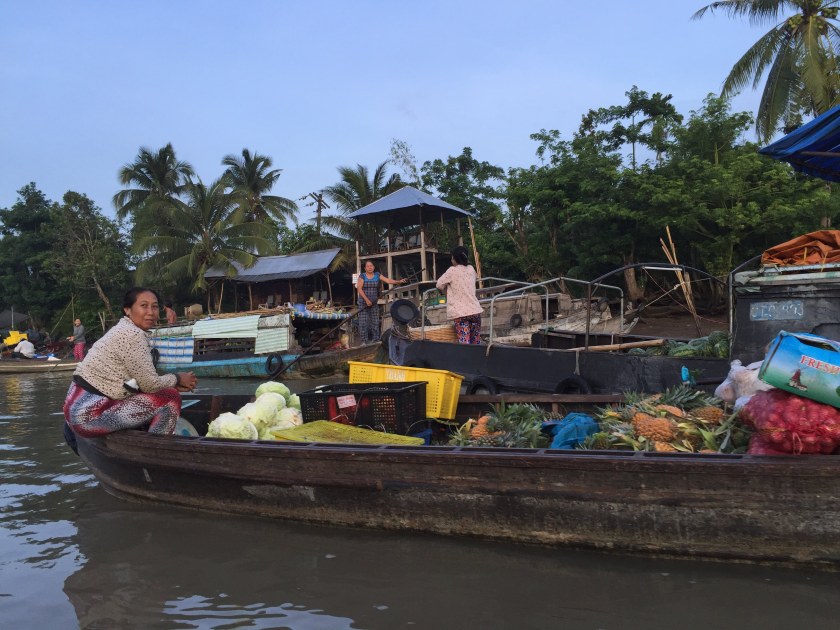
To see the floating markets, it’s necessary to stay overnight in the region – we were already on an arrow-boat and heading out to the markets at 6 am. Unfortunately it was a festival day so the markets weren’t as bustling as they normally were. These markets capture the agricultural richness of the region. Each boat had a long pole at its bow, with specific vegetables tied to the pole indicating the produce it was carrying. Transferring larger vegetables like cabbages to the buyer’s boat is simple: the crew form a line and toss the cabbages from one person to the next until it reaches the boat. Small boats selling coffee and breakfast plied between the larger boats and tourist boats.

The traders of the floating market spend weeks at a time on the river – a way of life that has its own rhythms according to the seasons. From here, the fruits and vegetables make their way to markets around the country, ferried to their destinations by truck, motorbike and even bicycle. Boats from here sail all the way to Ho Chi Minh City. This is a way of life that has gone on for generations, and is likely to continue for a while longer. And along the river, people still live in wooden houses, and use the river water for washing or for their plants. The Mekong is life. 

IMG_8730
Children outside a house in a village near one of the floating markets

IMG_8758

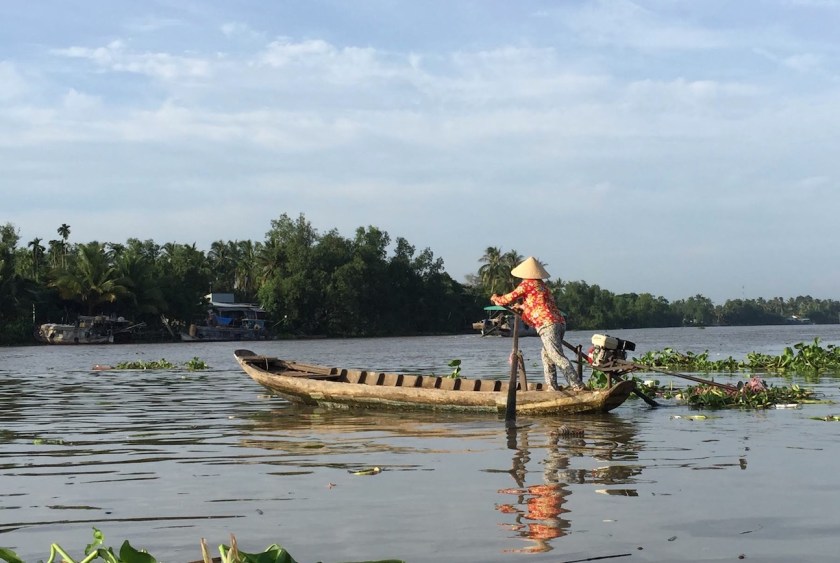
Leaving the market, our boat turned into a network of smaller tributaries and we passed quietly through a lush green landscape, passing the occasional village. It was 7 am, still early, but already time for the morning news and daily propaganda radio broadcasts amplified in the villages through outdoor speakers. Accompanied by this morning soundtrack, people went about their daily business, riding motorbikes and bicycles on narrow roads and paths and across bridges in this peaceful watery land. Women still transported goods the traditional way, on baskets suspended on either end of a wooden pole balanced across their shoulders, wearing the traditional conical bamboo hats to protect them from the sun. From the narrow tributaries, we suddenly emerged into a wider channel and came across fishermen (and women) in small boats. Time to capture some signature shots of life on the Mekong.

I imagined the Mekong as a network of veins, arteries and capillaries, bringing teeming life onto the earth and sustaining the lives of people, plants, and the very land here. Nature provides and human ingenuity over the generations has harnessed the power of the river for life and civilisation.

We also learnt that sadly, the Mekong is changing, and possibly not for the better. Further upstream, stretches of the river have been dammed for hydroelectricity, with effects on the river’s route downstream, its biodiversity, and ultimately the lives of people living along the mighty river. It’s not certain what the future will bring, and what damage we’re doing to these rich lands. 

IMG_8657